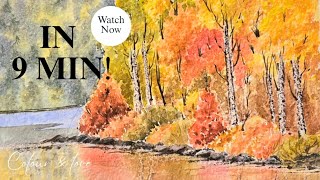
How to Mix Watercolors Like a PRO! Watercolor Painting for Beginners, by makoccino on YouTube. 8 min 21 s.
- Video length
- 8 min 21 s
- Time to do it
- 20 minutes
- Difficulty
- Easy
- Steps
- 10
What you need
Steps
Choose a small set of paints: a warm and cool red, yellow and blue, plus a dark like burnt umber. Six colors are plenty for learning to mix.
Draw a grid on watercolor paper with your colors along the top row and down the left column. Label each row and column so you can read the chart later.
Wet each pan or squeeze a pea-sized amount of tube paint into the palette wells. Leave space between the wells so the colors do not run together.
Rinse your brush in clean water, pick up one color and paint the matching squares along its row. Rinse again before you start the next color.
Mix two colors in a spare well, adding the darker one a little at a time. Paint the result into the square where that row and column meet.
For greens, mix a blue with a yellow, then make it warmer with more yellow or cooler with more blue. Test each version on scrap paper first.
For purples, mix a red with a blue. A cool red with a cool blue gives a clean violet, while a warm red gives a softer, grayer purple.
For oranges, mix a red with a yellow. A warm red gives a bright orange and a cool red gives a more muted one.
Darken a color by adding a little of its opposite on the color wheel or a touch of burnt umber instead of black. Add small amounts so the mix stays bright.
Let the chart dry, then note the pairs you like best. Use those recipes the next time you paint.
Tips and common mistakes
Keep two jars of water, one for rinsing dirty brushes and one for clean mixing.
Stop after two or three pigments in one mix, since more than that usually turns the color muddy.
Use more water for pale washes and more pigment for strong, saturated color.
Wipe the brush on the palette rim between colors so you do not carry stray paint into the well.
Questions
Why do my watercolor mixes look muddy?
You are probably mixing three or more pigments or not rinsing the brush between colors. Stick to two colors at a time and use clean water.
How do I make a color darker without black?
Add a small amount of the color opposite it on the color wheel, or a little burnt umber. Build it up slowly so the mix stays clear.
Do I need a big set of paints to mix colors?
No. A warm and cool version of each primary plus one dark color lets you mix most of the colors you need.
This guide was drafted from the video's details and general task knowledge. It has not been checked against the full video. Check the video and relevant product instructions before following a procedure. Report a correction.