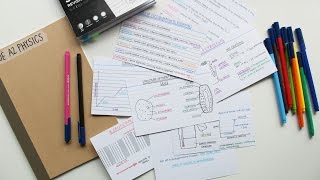
You will build a set of notes you can quiz yourself from, instead of pages you copy and never read again. It suits school and college students preparing for board or entrance exams. You need your textbook, class notes and two highlighters.
YouTube video: How to Make Notes Like a Topper ✍️ Scientific Method That Actually Works | Gunjan Ma’am
Caption availability is unknown. Check the CC control in the YouTube player.
- Video length
- 5 min 44 s
- Time to do it
- 30 minutes
- Difficulty
- Easy
- Steps
- 8
What you need
Steps
Read the chapter once without writing anything. Close the book and write down what you remember. This shows the gaps your notes must fill.
Pick a format before you start. Use a Cornell page for definitions and question practice, a mind map for linked topics, and a flowchart for step-by-step processes.
Set up a Cornell page: a wide left margin, a narrow column for cues and questions, and a strip at the bottom for a summary. Write the topic and date at the top.
Write in your own words, one idea per line. Skip sentences copied straight from the textbook. Aim for about one page per topic, not one page per subheading.
Turn each heading into a question in the cue column. Cover the notes, answer the question aloud, then check what you missed.
Use colour for meaning only: one colour for formulas, one for examples, one for doubts. Highlight after you finish a section, not while copying.
Change the layout by subject. Use diagrams and flowcharts for Science, worked steps for Maths, timelines and maps for SST, and quotes plus themes for English.
Revise on a schedule: read the summary strip the same day, then answer the cue questions a week later. Rewrite only the parts you get wrong.
Tips and common mistakes
Keep the bottom summary strip to five lines or fewer; if it will not fit, you do not understand the topic yet.
Leave a blank right margin so you can add new points later instead of squeezing them in.
Handwrite formulas and diagrams, since typing them is slow and easy to get wrong.
Do not decorate. Time spent on neat borders and extra colours is time you could spend self-testing.
Questions
How long should the notes for one chapter be?
About one page per topic, not per chapter. Short notes you can quiz yourself from beat long notes you only read once.
Should I make notes from the textbook or from class?
Use the textbook for structure and your class notes for what the teacher stressed. Merge both into one page per topic.
Are digital notes as good as handwritten ones?
Both work if you still test yourself. Typing is faster to search, while handwriting helps with diagrams and formulas.
The notes are drafted automatically from video details and general task knowledge. How the guide was prepared
Report a correction