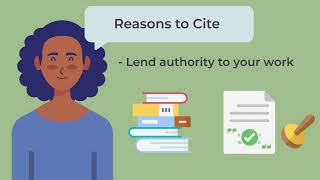
Learn the basics of citing sources so you give credit and avoid plagiarism. This suits students and anyone writing papers or reports. You will need your sources, notes and the citation style your school or publisher requires.
YouTube video: How to Cite Sources and Avoid Plagiarism: Introduction
YouTube’s video details do not confirm captions. Check CC in the player for available tracks.
- Video length
- 1 min 15 s
- Time to do it
- 20 minutes
- Difficulty
- Easy
- Steps
- 8
What you need
Steps
Understand the basic definition of plagiarism: presenting someone else's words or ideas as your own. This includes downloading or buying whole papers.
Do not cut and paste text from several sources into your draft. That is plagiarism even if you change a few words.
Decide when a source needs a citation. Cite it whenever you use another person's exact words, ideas or data.
Mark the boundaries of borrowed material. Put exact words in quotation marks and note where the borrowed part starts and ends.
Cite exact words with a quotation and a citation. For a longer quotation, set it off as a block quote and still give the source.
Cite a source even when you are not quoting. Paraphrasing without attribution is still plagiarism.
Check whether the fact counts as common knowledge. Widely known facts need no citation, but specific findings do.
Pick the citation style your course requires: MLA, APA, CSE, Chicago or Turabian. Follow its rules for in-text citations and the reference list.
Tips and common mistakes
Changing some words but copying whole phrases is still plagiarism, so rewrite in your own words and cite.
Keep a running list of sources as you read so you do not lose track of where an idea came from.
When in doubt about common knowledge, cite the source anyway.
Questions
Do I need to cite a source if I paraphrase it?
Yes. Paraphrasing without attribution is plagiarism, so cite the source even when you use your own words.
Which citation style should I use?
Use the one your teacher or publisher asks for. Common styles are MLA, APA, CSE, Chicago and Turabian.
What counts as common knowledge?
Facts most people know or can easily check need no citation. Specific findings, data and opinions do need one.
The notes are drafted automatically from video details and general task knowledge. How the guide was prepared
Report a correction