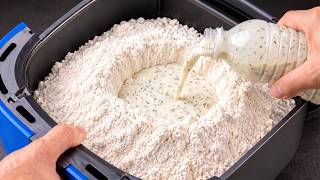
How to Make a Sourdough Starter From Scratch + Day by Day Progression! | Sourdough Starter Recipe, by Buttered Side Up on YouTube. 10 min 22 s.
- Video length
- 10 min 22 s
- Time to do it
- 15 minutes a day for 14 days
- Difficulty
- Easy
- Steps
- 9
What you need
Steps
Mix 30 grams of whole wheat flour with 30 grams of warm water, no hotter than 110 F, in a very clean small jar. Stir until no dry flour remains.
Cover the jar loosely with a lid. Mark the height of the starter with a rubber band or a sharpie so you can see it rise.
Set the jar in a warm spot out of direct sunlight. Leave it alone until the next day.
On day 2, scoop out and throw away all but 30 grams of the starter. Add 30 grams of whole wheat flour and 30 grams of water, then stir well.
Cover, mark the new height and return it to the warm spot. Repeat this same discard and feed once a day on days 3 through 6.
On day 7, mix a 50/50 blend of whole wheat and all-purpose flour. Discard all but 30 grams of starter, then add 30 grams of the blend and 30 grams of water.
Watch how fast the starter doubles. If it doubles in 8 to 12 hours, feed it twice a day. If there is little activity, keep feeding once a day.
From day 8 to day 14, feed with 30 grams of unbleached all-purpose flour and 30 grams of water, discarding down to 30 grams first.
Keep feeding daily until the starter doubles reliably within a few hours of each feed. It is then ready to bake with.
Tips and common mistakes
Use chlorine-free water, since chlorine can slow the wild yeast and bacteria you are trying to grow.
Weigh everything on a scale instead of using cups, because small flour and water amounts are easy to get wrong by volume.
A dark liquid on top is normal and just means the starter is hungry, so stir it in or pour it off and feed as usual.
Keep the jar loosely covered so gas can escape, and never seal it tight.
Questions
How do I know when my starter is ready to use?
It is ready when it doubles in size within a few hours of feeding and smells pleasantly sour, not rotten. A mature starter usually takes 7 to 14 days.
Can I use a different flour?
Yes. Whole wheat gets things going fast, and you can switch to unbleached all-purpose or rye later. Just keep the feeding amounts the same.
What if I forget to feed it one day?
Feed it as soon as you remember and carry on. A missed day now and then is fine, but long gaps let the starter go dormant and slow it down.
This guide was drafted from the video's details and general task knowledge. It has not been checked against the full video. Check the video and relevant product instructions before following a procedure. Report a correction.