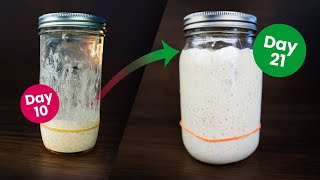
You will grow a wild yeast starter from just flour and water, then feed it daily until it doubles reliably. It suits beginners who want to bake bread without buying commercial yeast. You need a jar, a scale and about a week of daily attention.
YouTube video: How to make a SOURDOUGH STARTER
YouTube’s video details do not confirm captions. Check CC in the player for available tracks.
Other videos for this task
- How to make a sourdough starter from scratch 8:56 · 8 written steps
- How to make a sourdough starter from scratch 32:39 · 8 written steps
- How to make a sourdough starter from scratch 6:55 · 8 written steps
- How to make a sourdough starter from scratch 1:04 · 7 written steps
- How to make a sourdough starter from scratch 16:16 · 7 written steps
- How to make a sourdough starter from scratch 8:00 · 7 written steps
- How to make a sourdough starter from scratch 29:15 · 7 written steps
- How to make a sourdough starter from scratch 24:31 · 7 written steps
- How to make a sourdough starter from scratch 59:15 · 7 written steps
- How to make a sourdough starter from scratch 9:39 · 7 written steps
- How to make a sourdough starter from scratch 11:27 · 7 written steps
- How to make a sourdough starter from scratch 1:11 · 7 written steps
- How to make a sourdough starter from scratch 3:01 · 7 written steps
- How to make a sourdough starter from scratch 18:05 · 6 written steps
- How to make a sourdough starter from scratch 14:42 · 6 written steps
- How to make a sourdough starter from scratch 7:19 · 6 written steps
- How to make a sourdough starter from scratch 12:39 · 6 written steps
- Video length
- 13 min 55 s
- Time to do it
- 7 days
- Difficulty
- Easy
- Steps
- 7
What you need
Steps
Mix equal weights of flour and water in a jar, for example 50 g of each, until you get a thick, lump-free paste.
Scrape the sides down, cover the jar loosely and leave it at room temperature, around 21 to 24 C.
Wait 24 hours. You may see a few bubbles and a slightly sour smell.
Each day, discard all but about 50 g of the starter, then stir in 50 g of flour and 50 g of water.
Keep feeding once a day at the same time and watch for the starter to rise and fall after each feed.
After about 5 to 7 days, check that it doubles in size within 4 to 8 hours of feeding and smells pleasantly sour.
Use or bake with the starter when it is at its peak, then feed it again and store it in the fridge between bakes.
Tips and common mistakes
Use unchlorinated water, since chlorine can slow the wild yeast down.
Keep the jar loosely covered so gas can escape but dust and insects stay out.
A dark liquid on top is normal alcohol buildup; just stir it in or pour it off.
If mold appears, throw the starter out and start again with a clean jar.
Questions
How often do I need to feed it?
Feed it once a day at room temperature while you are building it. Once it is active, you can store it in the fridge and feed it about once a week.
Why is nothing happening after two days?
Starters often look quiet in the first days before the yeast builds up. Keep feeding daily and keep the jar warm, around 21 to 24 C.
Can I use a different flour?
Yes. Whole grain and rye flours ferment faster, while white all-purpose flour works too but may take a little longer.
The notes are drafted automatically from video details and general task knowledge. How the guide was prepared
Report a correction