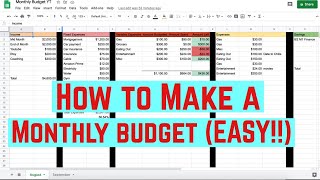
Set up a simple monthly budget by hand in a composition notebook. You will list your income, fixed bills and everyday spending, then track what is left. It suits beginners who want a cheap paper system with no apps or spreadsheets.
YouTube video: Planning ideas in a composition notebook Budget planning and ideas for beginner planners
YouTube’s video details do not confirm captions. Check CC in the player for available tracks.
- Video length
- 16 min 18 s
- Time to do it
- 30 minutes
- Difficulty
- Easy
- Steps
- 8
What you need
Steps
Open to a fresh page and write the month and year at the top. Leave the first two pages free for a yearly overview later.
List your monthly income after tax on the left side. Include each regular source on its own line and add them up.
List fixed bills below the income: rent or mortgage, utilities, phone, internet, insurance and loan payments. Write the amount and due date next to each.
Add a section for variable spending such as food, fuel, clothes and fun. Give each a monthly limit based on last month's statements.
Subtract fixed bills and spending limits from your income. If the number is negative, cut the variable limits until it is zero or more.
Draw a small table with columns for date, item, amount and running balance. Use it to log every purchase during the month.
At month end, total each category and compare it to your limit. Write one or two notes on what went over and why.
Copy the same layout onto the next page for the new month and carry over any savings or debt.
Tips and common mistakes
Round amounts to whole numbers so the maths stays quick and easy to redo.
Log receipts the same day, because a pile of loose slips is hard to sort later.
Keep a small buffer line for surprise costs like repairs or gifts.
Questions
How many pages should one month take?
Two facing pages are usually enough: one for the plan and limits, one for the spending log. Add pages if you track many small purchases.
Do I need to track every single purchase?
No. Track the categories that change most, like food and fuel, and group small cash buys under one line.
What if my income changes each month?
Budget from your lowest expected income and treat extra money as savings or debt payment when it arrives.
The notes are drafted automatically from video details and general task knowledge. How the guide was prepared
Report a correction