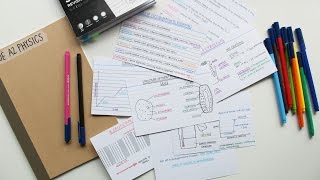
A mind map puts one topic at the centre of the page and spreads related ideas out in branches, so you can see how everything connects. This guide walks you through building one from a textbook chapter or lecture notes. It suits students revising for exams or anyone who needs to hold onto new material.
YouTube video: Want to learn better? Start mind mapping | Hazel Wagner | TEDxNaperville
Caption availability is unknown. Check the CC control in the YouTube player.
- Video length
- 15 min 46 s
- Time to do it
- 20 minutes
- Difficulty
- Easy
- Steps
- 8
What you need
Steps
Pick one topic you need to learn, such as photosynthesis or the causes of World War One. Keep it narrow enough to fit on a single page.
Turn the paper landscape and write the topic in the centre in large letters. Draw a simple picture or symbol next to it if you can.
Draw four to seven thick branches out from the centre, one for each main sub-topic. Use a different colour for each branch.
Write a single keyword on each main branch, in capital letters, sitting on the line rather than under it.
Add thinner branches off each main one for the supporting details, facts, dates and examples. Keep each branch to one word or a short phrase.
Draw a small image or symbol on the branches that are hardest to remember. Pictures are easier to recall than plain words.
Check your notes and add anything you missed. If a branch has more than about five sub-branches, split it into two.
Redraw the map from memory on a fresh sheet a day later, then compare it with the original and fill the gaps.
Tips and common mistakes
Use one keyword per branch instead of full sentences, because single words are quicker to scan and easier to recall.
Keep the map to one page so your eye can take in the whole structure at once.
Draw the map by hand first if you can, since the physical act of drawing helps memory.
Start every branch at the centre and work outward, so the layout always shows how ideas connect.
Questions
Do I need software to make a mind map?
No. A sheet of paper and a few coloured pens work well and are often faster. Apps help if you want to rearrange branches or share the map later.
How many branches should a mind map have?
Aim for four to seven main branches. More than that gets cluttered and you start losing the overall picture.
Will a mind map alone get me through an exam?
No. It works best alongside practice questions and spaced review. Use the map to organise and test your recall, not to replace reading the material.
The notes are drafted automatically from video details and general task knowledge. How the guide was prepared
Report a correction