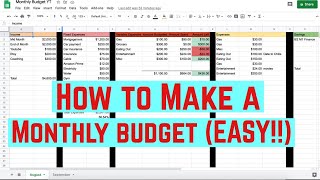
You will set up a budget that spends money you already earned, so a new paycheck no longer vanishes the day it lands. It suits anyone paid monthly or weekly who wants to stop living paycheck to paycheck. You need one month of expenses saved as a starting buffer.
YouTube video: I Tried Living on Last Month’s Income for 30 Days | The Results
Caption availability is unknown. Check the CC control in the YouTube player.
Choose a chapter (23)
- Video length
- 14 min 25 s
- Time to do it
- 30 minutes to set up, then one
- Difficulty
- Medium
- Steps
- 9
What you need
Steps
Add up last month's spending from your bank and card statements. Group it into rent, bills, food, transport and fun so you know your real monthly cost.
Save that total as a buffer before you change anything else. Keep it in a separate savings account so you are not tempted to dip into it.
Write a budget that spends last month's income, not the paycheck landing this month. Give every pound or dollar a job before the month starts.
When your new paycheck arrives, move it straight into the buffer account. The spending money for the month stays exactly as it was.
Check your balance once a week against the budget. A short mid-month check catches overspending while you can still fix it.
Test small purchases for a week. Pause before each one and ask whether it comes out of this month's plan or next month's money.
Pay surprise bills from the buffer, then rebuild it from the next paycheck. Do not borrow the money from next month's income.
List yearly and irregular costs like insurance, car service and gifts. Divide each by twelve and save that amount every month.
Review the month at the end. Compare what you planned with what you actually spent, then adjust next month's budget.
Tips and common mistakes
The first month feels tight because you are spending older money while also holding some back.
Keep the buffer in a separate account so it is not one tap away when you are shopping.
If your income changes, rebuild the buffer slowly instead of scrapping the plan.
Being a month ahead does not fix overspending, so the budget still has to balance each month.
Questions
How much do I need before I start?
Aim for one month of essential expenses. If that is too much, start with half and add to it each payday until the buffer is full.
What if I have no savings at all?
Build a small buffer of a few hundred first, then grow it to a full month of costs before you switch your spending over.
Does this work on a variable income?
Yes, but budget from your lowest recent month. That way a smaller paycheck will not break the plan.
The notes are drafted automatically from video details and general task knowledge. How the guide was prepared
Report a correction