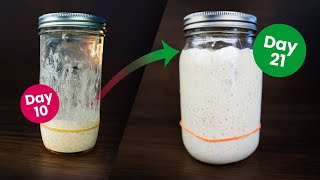
Keep a sourdough starter healthy by feeding it flour and water on a regular schedule. This suits anyone baking bread at home, from beginners to regular bakers. You need a jar, flour, water and a little patience to learn your starter's rhythm.
YouTube video: How I've Fed My Sourdough Starter For 10+ Years
Captions are available. Use CC in the YouTube player.
Other videos for this task
- How to feed and maintain a sourdough starter 9:32 · 8 written steps
- How to feed and maintain a sourdough starter 9:14 · 8 written steps
- How to feed and maintain a sourdough starter 2:04 · 7 written steps
Choose a chapter (13)
- Video length
- 13 min 25 s
- Time to do it
- 10 minutes
- Difficulty
- Easy
- Steps
- 8
What you need
Steps
Weigh your jar with the starter inside so you can track how much carryover you keep.
Decide your ratio of flour to water to carryover starter. A common starting point is equal weights of flour and water with a small amount of starter.
Add the water to the jar and stir it into the starter until it loosens.
Add the flour and mix until no dry patches remain. Scrape down the sides of the jar.
Pick a feeding schedule that fits your baking. Feed more often if you bake daily, less if the starter rests in the fridge.
Use a flour your starter likes, such as white or whole wheat, and stay consistent so the fermentation is predictable.
Keep the starter at a steady warm room temperature, roughly in the low to mid 20s Celsius, unless you store it in the fridge.
Wait until the starter looks ripe: domed, bubbly and slightly sour before you mix dough.
Tips and common mistakes
If you forget to feed the starter, feed it and give it time to recover before baking.
A ripe starter is domed and bubbly, not collapsed and runny.
Keep the jar lid loose so gas can escape.
Weigh everything on a scale instead of using cups for consistent results.
Questions
How often should I feed my starter?
It depends on your baking schedule and where you store it. A starter kept at room temperature needs feeding more often than one kept in the fridge.
Why do I have to feed a starter?
Feeding gives the yeast and bacteria fresh flour and water to eat, which keeps the culture active and strong.
What does a ripe starter look like?
It should be domed and full of bubbles with a slightly sour smell, ready to raise your dough.
The notes are drafted automatically from video details and general task knowledge. How the guide was prepared
Report a correction