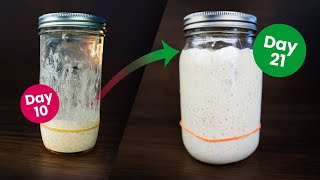
Keep a sourdough starter active by feeding it flour and water on a schedule that matches how often you bake. It suits home bakers who already have a starter going. You need flour, water, a scale and a jar or container.
YouTube video: How I Feed My Sourdough Starter | How to Maintain a Sourdough Starter
YouTube’s video details do not confirm captions. Check CC in the player for available tracks.
Other videos for this task
- How to feed and maintain a sourdough starter 9:14 · 8 written steps
- How to feed and maintain a sourdough starter 13:25 · 8 written steps
- How to feed and maintain a sourdough starter 2:04 · 7 written steps
Choose a chapter (12)
- Video length
- 9 min 32 s
- Time to do it
- 10 minutes
- Difficulty
- Easy
- Steps
- 8
What you need
Steps
Understand that feeding means giving the starter fresh flour and water so the yeast and bacteria have food to ferment.
Weigh your starter, then add fresh flour and water. Keep the amounts consistent each feed so you can compare results.
Mix the flour and water into the starter until no dry flour remains, then scrape down the sides of the jar.
Use a flour blend of about 90% high protein organic bread flour and 10% whole rye for strong activity.
Check whether your starter is alive by looking for bubbles and rise after a feed before you assume it is dead.
Feed when the starter has risen and peaked, not on a fixed clock. Watch the dome and smell rather than the time alone.
Feed daily if you bake often. If you bake rarely, store the starter in the fridge to slow fermentation.
Track each feed in a logbook with the time and inoculation, or also note water and room temperatures.
Tips and common mistakes
Professional bakers may feed 2 to 3 times a day, but once a day is usually enough at home.
Keep your feed amounts and flour blend the same so you can spot changes in rise and smell.
A fridge-stored starter needs a feed and warm-up before you bake with it.
Questions
How often should I feed my sourdough starter?
Feed it daily if you bake often. If you bake rarely, keep it in the fridge to slow fermentation and feed it before baking.
What flour is best for feeding a starter?
A blend of about 90% high protein organic bread flour and 10% whole rye gives strong activity.
How do I know if my starter is dead?
Look for bubbles and rise after a feed. A starter that shows no activity after feeding may need more time or a warmer spot.
The notes are drafted automatically from video details and general task knowledge. How the guide was prepared
Report a correction