You will get a plain-English path for teaching a beginner what machine learning, neural networks, LLMs and prompts actually mean. It suits anyone who has to explain AI at school, at work or to a curious friend. No maths or coding is needed, just one running example you keep coming back to.
YouTube video: How AI Actually Works
Captions are available. Use CC in the YouTube player.
Choose a chapter (11)
- Video length
- 16 min 36 s
- Time to do it
- 20 minutes
- Difficulty
- Easy
- Steps
- 10
What you need
Steps
Start with machine learning. Tell your beginner it means a computer learns from many examples instead of following rules a person wrote by hand.
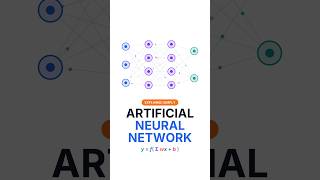
Explain that a neural network learns patterns by adjusting itself as it sees more examples. Compare it to recognising a friend's face after seeing many photos.
Describe a large language model as a next-word predictor trained on a huge amount of text. It guesses the most likely next token, again and again.
Cover tokens and context windows. The model only holds a limited amount of text at once, so very long chats can lose details from earlier.
Show how vector embeddings turn words into lists of numbers. Words with similar meaning end up close together, which is how search finds related results.
Move to prompting. Tell the model the role, the task, the output format and one example, then ask for a shorter or clearer version if the answer is weak.
Explain retrieval augmented generation. The tool fetches relevant documents first and hands them to the model, so answers come from your own material.
Compare fine-tuning and RAG. Fine-tuning changes how the model behaves, while RAG supplies fresh facts at question time, so use RAG for changing information.
Warn about hallucinations. The model can produce fluent, confident text that is simply wrong, so check names, numbers and quotes against a real source.
Finish with generative versus agentic AI. Generative tools produce text or images, while agents take several steps and use tools to reach a goal.
Tips and common mistakes
Keep one example, such as a pizza order, running through every concept so the beginner has something to hold on to.
Skip the maths and call weights and layers the settings the network tunes by itself.
Ask the beginner to explain the idea back to you in one sentence to check it landed.
Point out that a confident tone is not the same as a correct answer.
Questions
Do I need maths to explain a neural network?
No. You can describe it as a system that adjusts its internal settings after seeing many examples. Leave the formulas for later.
What is the difference between AI, machine learning and deep learning?
AI is the broad idea of machines doing clever tasks. Machine learning is one way to build it, and deep learning uses many-layered neural networks.
What is a context window in simple terms?
It is how much text the model can hold in mind at one time, counted in tokens. Each model sets its own limit, and older messages can drop out.
The notes are drafted automatically from video details and general task knowledge. How the guide was prepared
Report a correction