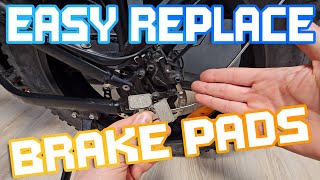
How to Change Brake Pads on Shimano Disc Brakes (Step-by-Step Guide), by J Dirom on YouTube. 5 min 29 s.
- Video length
- 5 min 29 s
- Time to do it
- 20 minutes
- Difficulty
- Easy
- Steps
- 8
What you need
Steps
Check the pads through the top of the caliper. If the friction material is under about 1 mm thick or the braking feels weak and noisy, replace them.
Remove the wheel and slide the pad retaining bolt or split pin out with pliers. Note how the spring clip sits.
Pull the old pads and spring out of the caliper. Clean the pistons and caliper body with isopropyl alcohol on a rag.
Push the pistons fully back into the caliper with a plastic tyre lever. Never use a metal tool on the pistons.
Fit the spring clip to the new pads and slide them into the caliper. Refit the retaining bolt or pin.
Refit the wheel and spin it. Squeeze the lever a few times until the pads touch the rotor and the lever feels firm.
Centre the caliper if the rotor rubs. Loosen the two mounting bolts, hold the brake on, and retighten them evenly.
Bed in the pads. Ride at moderate speed and brake firmly several times, then let the brakes cool.
Tips and common mistakes
Use mineral oil for Shimano systems, never mineral spirits or DOT fluid.
Don't touch the pad surface or rotor with bare fingers, since oil reduces braking.
Replace pads in pairs and check the rotor thickness while you are there.
If the lever feels spongy after fitting, the system may need a bleed.
Questions
How do I know which pads fit my brakes?
Match the pad shape and code to your exact caliper model, such as the Shimano GRX, 105 or Dura-Ace range. Bring the old pad to the shop if you are unsure.
Do I need to bleed the brakes after changing pads?
No. Pushing the pistons back can raise fluid level in the reservoir, so check it and remove excess fluid if needed.
Why do my new pads squeal?
They are probably contaminated or not bedded in. Clean the rotor with isopropyl alcohol and repeat the bed-in rides.
This guide was drafted from the video's details and general task knowledge. It has not been checked against the full video. Check the video and relevant product instructions before following a procedure. Report a correction.