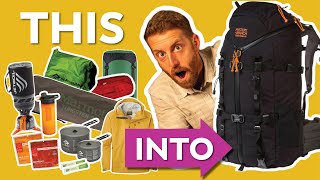
You will build a sleep system that matches the season, from a light summer setup to a winter kit. It suits backpackers and hunters who camp out and want to sleep warm without hauling too much weight. You need a tent, bag, pad and a night to test it.
YouTube video: How to Build a Bombproof Backcountry Sleep System for any Season
YouTube’s video details do not confirm captions. Check CC in the player for available tracks.
Choose a chapter (6)
- Video length
- 15 min 29 s
- Time to do it
- 1 hour
- Difficulty
- Easy
- Steps
- 9
What you need
Steps
Match the system to the season you are camping in, not one setup for everything. Check the expected overnight low and pick a bag rated about 10°F below it.
For early season ultralight trips, use a light single-wall or trekking pole tent, a 30°F quilt, a short pad with an R-value around 2 to 3, and a liner.
For early season Alaska, size up. Take a freestanding four-season tent, a 15 to 20°F bag, a full-length pad with an R-value of 4 or more, and a waterproof floor layer.
For mid season, carry a two-person tent so you can split the load. Add a quilt rated near 20°F and a wider pad so you do not roll off in the night.
For late season, go to a four-season tent, a 0°F bag, two stacked pads or one with an R-value of 6 or more, and a down jacket to wear inside.
Pitch the whole setup in your yard before the trip. Lie in it for 20 minutes, look for cold spots and check that the pad does not slide on the floor.
Cut a ground sheet or footprint to the size of the tent floor. It protects the floor from sharp rocks and adds a moisture barrier under your pad.
Pack the bag loose in a waterproof stuff sack and strap the pad outside the pack. Line the pack with a trash bag so nothing soaks through.
Check the forecast the night before. If the low drops more than 10°F below your bag rating, swap in one warmer item.
Tips and common mistakes
Cold comes up from the ground, so spend your money on the pad before the bag.
Never cook inside a closed tent, because carbon monoxide can kill you.
Do not pitch under dead trees or loose branches, especially when wind is forecast.
Sleep in dry base layers, since damp clothing pulls heat out of you all night.
Questions
What R-value sleeping pad do I need?
Around 2 to 3 works for summer, 4 to 5 for spring and fall, and 6 or more for snow and deep cold.
Can I use one sleep system all year?
No. A summer quilt will not keep you warm below freezing, and a winter bag is too heavy and too hot for July.
How do I stop condensation in a single-wall tent?
Leave a vent open and pitch where air moves through. Wipe the walls dry in the morning before you pack the tent away.
The notes are drafted automatically from video details and general task knowledge. How the guide was prepared
Report a correction