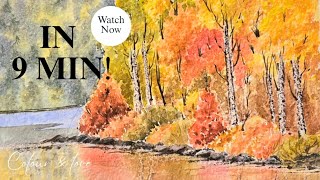
5 Beginner Mistakes to Avoid in Watercolor Painting, by Matthew White - Watercolor Instruction on YouTube. 8 min 10 s.
- Video length
- 8 min 10 s
- Time to do it
- 20 minutes
- Difficulty
- Easy
- Steps
- 8
What you need
Steps
Tape or clip your paper to a board and tilt it to about 35 degrees. A slight slope lets water and pigment flow down instead of pooling in one spot.
Load your brush with water and paint, then test the mix on scrap paper before touching your painting. This shows how strong the color really is.
Mix more paint than you think you need. Running out mid-wash forces you to stop and remix, which often leaves streaks and uneven color.
Keep your brush moving and avoid scrubbing back and forth over the same wet area. Scrubbing lifts the paper surface and muddies the color.
Let each layer dry fully before adding the next. Touching wet paint with a wet brush blends layers you wanted to keep separate.
Use a large mop for big washes, a medium round for shapes and a small pointed brush for details. Match the brush size to the area you are painting.
Rinse your brush and change your water often. Dirty water dulls every color you mix after it.
Plan your painting before you start. Decide the light areas, the dark areas and the order of layers so you are not guessing halfway through.
Tips and common mistakes
Muddy color usually comes from too many pigments mixed together, so limit each mix to two or three.
Keep a scrap sheet beside you to test color strength and brush shape before each stroke.
Do not overwork an area. In watercolor, a single confident stroke looks fresher than several corrected ones.
Use 140lb cold press paper so it can handle water without buckling.
Questions
Why do my watercolor washes look streaky?
Streaks usually come from too little mixed paint or from stopping mid-wash. Mix a generous puddle first and keep the brush moving until the area is covered.
How wet should my brush be?
It depends on the layer. Use a wet brush for broad washes and a damp or nearly dry brush for detail and edges.
Do I need expensive paints to start?
No. A small set of good quality paints in a few core colors will take you further than a large cheap set.
This guide was drafted from the video's details and general task knowledge. It has not been checked against the full video. Check the video and relevant product instructions before following a procedure. Report a correction.