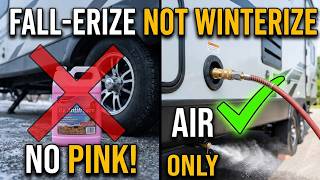
How to Winterize an RV with a Tankless Water Heater | Step-by-Step Guide, by Hilltop Camper and RV on YouTube. 9 min 16 s.
- Video length
- 9 min 16 s
- Time to do it
- 45 minutes
- Difficulty
- Medium
- Steps
- 10
What you need
Steps
Open the freshwater tank drain and the low-point drain valves to empty the system. Let all water run out before you close anything.
Open every faucet, the shower and the toilet valve so air can enter and water can escape. Leave them open while you drain.
Connect the blow-out plug to the city water inlet and set the compressor to about 30 psi. Blow air through until only a fine mist comes out.
Check your tankless heater's bypass setup. Many units need the heater isolated or drained per the manual, so confirm the correct valve position before adding antifreeze.
Clear the low-point drains and water heater lines with air, then blow out the interior fixtures one at a time.
Blow out the outdoor shower and any exterior faucets too. These are easy to forget and will crack if water stays inside.
Find the winterization valve and pump, then place the suction hose in a jug of RV antifreeze.
Run the pump and open each faucet and the shower until solid pink antifreeze flows out. Close each one as it turns pink.
Flush the toilet until antifreeze appears, then add antifreeze to the low-point drains and drain traps.
Remove the suction hose, stow it, and wipe up any antifreeze spills. Recheck every fixture for pink coverage.
Tips and common mistakes
Keep compressor pressure near 30 psi. Higher pressure can damage plumbing and the water heater.
Never use automotive antifreeze. Use only non-toxic RV antifreeze rated for your climate.
Follow your tankless heater manual for bypass and draining, since procedures differ by model.
Antifreeze left in the fresh tank can be hard to rinse, so pump from a jug instead.
Questions
Do I need to bypass a tankless water heater?
It depends on the model. Many tankless units are drained and isolated rather than filled with antifreeze, so check your manual before you start.
Can I skip the compressed air step?
You can, but blowing out the lines first means less antifreeze is needed and fewer pockets of water remain to freeze.
How much RV antifreeze will I need?
Most small campers take about 2 to 3 gallons. Have an extra jug on hand so you do not run the pump dry.
This guide was drafted from the video's details and general task knowledge. It has not been checked against the full video. Check the video and relevant product instructions before following a procedure. Report a correction.