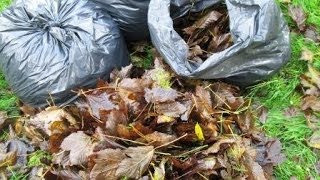
Turn your raked autumn leaves into free soil food instead of bagging them for the curb. You will shred leaves for pot mulch, pack pots for winter, mulch beds and garlic, and build leaf mold and compost. It suits any gardener with a pile of dry leaves and a few spare pots or bags.
YouTube video: I Stopped Raking My Leaves. Here’s What It Did to My Garden Soil
YouTube’s video details do not confirm captions. Check CC in the player for available tracks.
Choose a chapter (8)
- Video length
- 14 min 19 s
- Time to do it
- 1 hour
- Difficulty
- Easy
- Steps
- 7
What you need
Steps
Rake up dry leaves and keep them separate from wet clumps. Dry leaves shred more evenly and rot faster than soggy ones.
Shred the leaves by running a lawn mower over a thin layer on the grass, or by emptying a bag and mowing through it.
Spread a 2 to 3 inch layer of shredded leaves on the soil in your pots. Keep a finger width of bare soil around each stem so wet leaves do not touch the bark.
Pack dry leaves around the outside of pots and between them to insulate roots through hard freezes. Keep the pot drainage holes clear.
Mulch garlic and empty fall beds with 2 to 3 inches of shredded leaves after planting. Pull the mulch back from direct contact with stems.
Make leaf mold by stuffing wet leaves into a wire ring or tied trash bag. Leave it for months and check that the leaves crumble and hold together when squeezed.
Add leaves to the compost bin at roughly 2 to 3 buckets of brown leaves for every bucket of green material. Mix so the pile stays odor free.
Tips and common mistakes
Keep black walnut leaves out of compost and beds, since they can stunt tomatoes and other plants.
Shred leaves before adding them to pots, because whole leaves mat down and block water.
Wet leaves packed against stems invite rot, so always leave that small gap.
Leaf mold is ready when a squeezed handful stays clumped instead of falling apart.
Questions
Can I put whole leaves straight on garden beds?
Yes, but they mat and blow around. Shredding them first helps water soak in and speeds up breakdown.
How long does leaf mold take?
Usually six months to a year or more, depending on moisture and leaf type. Check with the squeeze test.
Do leaves make good compost?
Yes, they are a brown carbon source. Balance them with green kitchen scraps and turn the pile to keep it odor free.
The notes are drafted automatically from video details and general task knowledge. How the guide was prepared
Report a correction