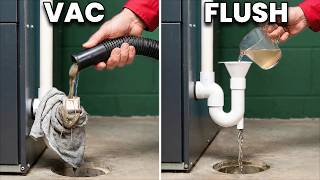
I Tried the Sediment Buster—Look What Came Out of My Water Heater, by How Do I Fix It? on YouTube. 9 min 5 s.
- Video length
- 9 min 5 s
- Time to do it
- 1 hour
- Difficulty
- Medium
- Steps
- 8
What you need
Steps
Turn off the power at the breaker, or set the gas control to pilot, then let the tank cool for a few hours and close the cold water supply valve.
Screw a garden hose onto the drain valve and run the other end to a floor drain or outside, keeping it lower than the tank.
Open the drain valve and watch the flow. A trickle or nothing at all means sediment is blocking the valve opening.
Close the valve again, then connect the flushing tool to the drain valve as its instructions show, using only pressure-rated fittings.
Apply pressure slowly and in short bursts, and never go above the rating printed on the tank or the tool.
Keep pulsing the pressure to break the clog loose, then open the drain valve and check whether water starts moving.
Once it flows, let the tank drain completely and keep flushing until the water coming out of the hose runs clear.
Close the drain valve, remove the hose, refill the tank with the cold supply open, and only then restore power or gas.
Tips and common mistakes
Open a hot water tap in the house while draining so air can get in and the tank empties faster.
If the valve still clogs after flushing, swap the standard drain valve for a full-port ball valve so sediment passes through.
Never power up an empty tank, or the heating element or burner can be damaged within minutes.
Call a licensed plumber if the valve body is cracked, leaking at the threads, or you are unsure about the pressure ratings.
Questions
Why does my water heater only drip when I open the drain valve?
Mineral scale, rust and sediment have built up at the bottom of the tank and are blocking the valve opening. The clog usually has to be broken loose before the tank will drain normally.
Can I clear the clog with compressed air?
Only with a tool and fittings rated for it, and only at pressures within the tank's rating. Household compressor pressure can damage the tank or burst a hose, so follow the tool instructions exactly.
How often should I flush the tank after this?
Once a year is typical for most homes, and every six months if you have hard water. Regular flushing stops the sediment from packing down and clogging the valve again.
This guide was drafted from the video's details and general task knowledge. It has not been checked against the full video. Check the video and relevant product instructions before following a procedure. Report a correction.