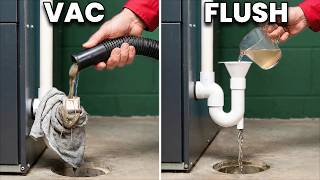
How to unclog a blocked sink with a plunger – no chemicals!, by James on Edge on YouTube. 3 min 57 s.
- Video length
- 3 min 57 s
- Time to do it
- 15 minutes
- Difficulty
- Easy
- Steps
- 8
What you need
Steps
Pull out the plug or stopper and lift away any hair, soap scum or food scraps from the drain opening. Wear rubber gloves if the mess is unpleasant.
Push a wet rag firmly into the overflow hole at the back or side of the basin. This forces the plunger's suction down the drain instead of out the overflow.
Run enough warm water into the basin to cover the rubber cup of the plunger by about 2.5 cm (1 inch). Water helps the cup seal and gives the suction something to push.
Set the plunger cup squarely over the drain and press down gently to squeeze out air. Check that the rim sits flat with no gaps.
Plunge with short, firm strokes about 10 to 15 times, keeping the cup sealed between pushes. Pull up sharply on the last stroke to help dislodge the clog.
Lift the plunger and see whether the water drains away. If it is still slow, repeat the plunging for another 10 to 15 strokes.
Once the water runs freely, flush the drain with a jug of hot but not boiling water. This carries away loose debris and helps clear soap residue.
Refit the plug or stopper and run the tap for a minute to check the flow. Wipe up any splashes and wash the plunger and rag before storing them.
Tips and common mistakes
Never plunge a sink after pouring chemical drain cleaner down it, as the chemical can splash back onto your skin or eyes.
Use a cup plunger with a flat rubber cup for sinks; a flange plunger is shaped for toilets and seals poorly on a basin drain.
If you have a double sink, seal the other drain with a wet rag before plunging, or the suction will escape through it.
If the water does not move at all after several tries, the blockage may be in the trap or further along the pipe and may need a drain snake.
Questions
Why does the overflow hole need to be blocked?
The overflow is a second opening into the same drain. If it stays open, the plunger pushes water out through it instead of pulling the clog free.
How do I know if the clog has cleared?
The water should drain away steadily within a minute or two. If it still drains slowly, repeat the plunging or try a drain snake.
Can I use a toilet plunger on a sink?
A flange plunger made for toilets can work in an emergency, but its shape seals poorly on a flat basin drain. A cup plunger gives a better seal.
This guide was drafted from the video's details and general task knowledge. It has not been checked against the full video. Check the video and relevant product instructions before following a procedure. Report a correction.