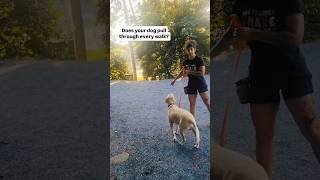
How to Stop Your Dog Pulling on the Lead - Step-by-Step Guide, by Revolution Dog Training on YouTube. 9 min 14 s.
- Video length
- 9 min 14 s
- Time to do it
- 10 minutes a day
- Difficulty
- Easy
- Steps
- 10
What you need
Steps
Start somewhere quiet, like a hallway or garden, with no other dogs or people around. Clip a 1.5 to 2 metre lead to a harness or flat collar and keep treats in a pouch.
Pick a marker word such as yes, or use a clicker. Say it the instant the lead hangs loose and your dog is beside you, then feed a small treat at your leg.
Stand still with your dog on your left and a treat in your left hand. Lure them to your side, mark and reward when their shoulder is level with your leg.
Take one or two steps forward. If the lead stays slack, mark and reward. If it tightens, stop moving and wait for your dog to step back.
Never pull back on the lead. Stand still, keep your lead hand close to your body and wait until your dog creates slack, then reward and walk on.
Turn and walk the other way when the lead goes tight, so your dog learns that pulling never gets them closer to what they want.
Practise pace changes, turns and stops for five minutes in the quiet space. Reward every few steps at first, then reward less often.
Build up slowly: add a few metres, then a new room, then the garden. Only move on when your dog can walk ten steps with a loose lead.
Add distractions last. Start well away from other dogs or people and reward your dog for checking in with you before the lead tightens.
Keep sessions to five or ten minutes and end while your dog is still doing well. Practise daily, and use a longer lead only in safe, enclosed areas.
Tips and common mistakes
Be consistent: if pulling sometimes works, your dog will keep trying it.
Do not yank or jerk the lead, as this can hurt your dog's neck and make pulling worse.
Keep the lead short near roads and never let your dog step into traffic while training.
If your dog is strong, use a front-clip harness rather than a choke chain or slip lead.
Questions
How long does loose lead training take?
Most dogs need several weeks of short daily sessions. Puppies and dogs with a long history of pulling take longer, so build distance and distractions slowly.
Should I use a harness or a collar?
A flat collar is fine for a dog that does not pull hard. A front-clip harness gives you more control with a strong puller and is kinder on the neck.
What if my dog still pulls toward other dogs?
Work further away and reward your dog for looking back at you. Move closer only when your dog can keep the lead slack at that distance.
This guide was drafted from the video's details and general task knowledge. It has not been checked against the full video. Check the video and relevant product instructions before following a procedure. Report a correction.