How To Take Effective Notes When Reading, by Aun Abdi on YouTube. 5 min 27 s.
- Video length
- 5 min 27 s
- Time to do it
- 20 minutes
- Difficulty
- Easy
- Steps
- 6
What you need
Steps
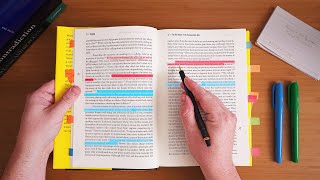
Set up your note-taking kit before you start. Keep a notebook, pen, highlighter and sticky tabs within reach so you do not stop reading to hunt for them.
Before you read a chapter, ask yourself a question about it. Write the question at the top of a fresh page so your reading has a purpose.
Read the chapter and highlight only the key points. Mark sentences that answer your question or explain the main idea, not every line.
When the chapter ends, write a short summary in your own words. Keep it to a few sentences that capture the main argument.
Pull out 5 to 10 principles or lessons from the chapter. Write each one as a single clear sentence you could act on.
Review your notes regularly. Reread your summaries and principles a day later, then again after a week, to keep them in memory.
Tips and common mistakes
Highlighting too much defeats the purpose. Stick to a few key sentences per chapter.
Write summaries in your own words instead of copying sentences from the book.
Keep one notebook per subject or book so your notes stay easy to find.
Review your notes before starting the next chapter to connect the ideas.
Questions
Do I need special note-taking software?
No. A paper notebook and pen work fine. If you prefer digital notes, any notes app or document will do.
How long should a chapter summary be?
A few sentences is enough. Aim to capture the main idea and how it answers your question, not every detail.
What if I cannot think of a question before reading?
Skim the chapter heading and first paragraph, then ask what you expect to learn from it.
This guide was drafted from the video's details and general task knowledge. It has not been checked against the full video. Check the video and relevant product instructions before following a procedure. Report a correction.