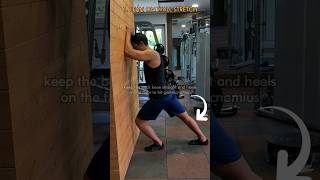
Tight Calves? Heck tight anything I’ll fix #dothingsyoudontwanttodo, by Matteo Daniele on YouTube. 1 min 10 s.
- Video length
- 1 min 10 s
- Time to do it
- 10 minutes
- Difficulty
- Easy
- Steps
- 9
What you need
Steps
Warm up briefly with a short walk or easy movement so your calves are not cold before you stretch.
Stand facing a wall and place both hands on it at chest height. Step one foot back about a leg length.
Keep the back knee straight and press the back heel flat into the floor. Lean into the wall until you feel a stretch in the upper calf.
Hold the straight-knee stretch for 30 to 45 seconds, breathing slowly. Keep the heel down the whole time.
Release and repeat the straight-knee stretch on the other leg. Do 2 to 3 rounds per side.
For the bent-knee drill, stand with the ball of one foot on a step or low ledge and let the heel float off the edge.
Bend that knee and slowly lower the heel below the step until you feel a stretch deep in the lower calf.
Hold the bent-knee position for 30 to 45 seconds, then press back up. Repeat 2 to 3 times per leg.
Finish with a few slow ankle circles and easy calf raises to bring blood flow back to the area.
Tips and common mistakes
Keep the back heel flat during the straight-knee stretch, or you lose most of the benefit.
Do not bounce. Hold a steady stretch and breathe out slowly to help the muscle relax.
Stop if you feel sharp pain in the calf or Achilles, and see a professional if it persists.
Questions
How often should I do these calf stretches?
Do them after most runs, or at least 3 to 4 times a week. Consistency matters more than long sessions.
Why do I need two different calf stretches?
The straight-knee stretch reaches the gastrocnemius, while the bent-knee drill targets the deeper soleus. Both muscles matter for running.
Can stretching alone fix tight calves?
Stretching helps, but adding calf strength work like raises and gradual load increases gives better long-term results.
This guide was drafted from the video's details and general task knowledge. It has not been checked against the full video. Check the video and relevant product instructions before following a procedure. Report a correction.