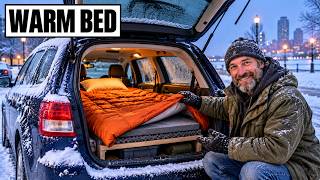
25 Cheap Camping Tricks You’ll Wish You Knew Before!, by Outdoor Survival Gear List on YouTube. 20 min 15 s.
- Video length
- 20 min 15 s
- Time to do it
- 15 minutes
- Difficulty
- Easy
- Steps
- 8
What you need
Steps
First rule out a real leak. Condensation leaves the whole inner wall and ceiling wet, often worst near your head and feet. A leak shows up as a drip line or a wet patch under a seam.
Pitch on high, level ground so water drains away instead of pooling under the tent. Skip hollows and the bottom of a slope.
Keep the ground tarp smaller than the tent floor. If the edges stick out past the walls, rain runs under the tent and creeps up between the layers.
Sleep with your head pointing uphill. Cold, damp air collects at the low end of the pitch, so this keeps your head out of the wettest air.
Open both vents and leave the door zip cracked by a finger's width. Moving air carries the moisture outside instead of letting it settle on the walls.
Never run a stove, heater or grill inside the tent to dry it out. Burning fuel adds water vapour and carbon monoxide, so ventilate instead and use a battery CO detector if you use any fuel appliance.
Keep wet boots, jackets and bags out of the sleeping area, in the porch or a dry bag. Every damp item puts more moisture into the air inside.
Wipe the walls with a dry cloth before you pack up, then air the tent at home. Packing it away wet breeds damp and smells.
Tips and common mistakes
Leave a vent open even on cold nights, because a sealed tent traps the moisture you breathe out and it has to land somewhere.
Pick a pitch that catches morning sun and a breeze so the tent dries before you pack it.
Check any hot water bottle for leaks before it goes into your sleeping bag.
Wear a hat to bed and use a hot water bottle instead of trying to heat the tent.
Questions
Why is the inside of my tent wet when it didn't rain?
Warm, damp air from your breath and body hits the cold outer fabric and turns back into water. That is condensation, not a leak, and airflow is the fix.
Does a bigger tent stop condensation?
More space and more vents help, but the real fix is moving air. Open the vents and leave a small gap at the door.
Can I use a small heater inside the tent?
No. Fuel-burning heaters and stoves give off carbon monoxide and add moisture to the air. Use a warmer sleeping bag, a hat and a hot water bottle instead.
This guide was drafted from the video's details and general task knowledge. It has not been checked against the full video. Check the video and relevant product instructions before following a procedure. Report a correction.