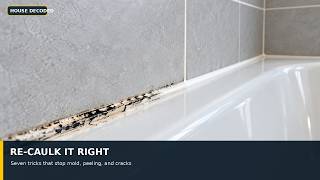
Why Bathroom Mold Keeps Coming Back (Even After Cleaning), by Why It Cleans on YouTube. 8 min 49 s.
- Video length
- 8 min 49 s
- Time to do it
- 2 hours plus drying time
- Difficulty
- Easy
- Steps
- 8
What you need
Steps
Clean the visible mold first with a mold cleaner or white vinegar and a stiff brush. Wear gloves and open a window. Never mix bleach with vinegar or ammonia.
Find the moisture source. Check for dripping pipes, a leaking shower screen, water pooling behind the toilet, or damp patches on the ceiling below.
Run the extractor fan during and after every shower for at least 20 minutes. If there is no fan, open a window and leave the door ajar.
Wipe down tiles, the shower screen and the bath edge with a squeegee or cloth after each use so water does not sit on surfaces.
Cut out old, blackened silicone around the bath or shower tray with a scraper. Remove all traces, then clean and dry the joint fully.
Apply a new bead of mold-resistant silicone and smooth it with a wet finger or tool. Let it cure for 24 hours before using the bath or shower.
Re-grout any cracked or crumbling grout lines and seal porous tiles so water cannot get behind them.
Keep the room dry between showers. Leave the door open after use, hang towels outside, and fix any leak you found before it spreads.
Tips and common mistakes
Mold needs moisture, so fixing damp air and leaks matters more than using stronger cleaners.
Silicone that has gone black usually cannot be cleaned back to white, so replace it instead of scrubbing.
Run the fan while you shower and for a while afterwards, not just for a minute.
If mold covers a large area or keeps returning after resealing, call a professional to check for hidden water damage.
Questions
Why does mold come back so fast after cleaning?
Cleaning kills what you can see, but mold spores stay in the air and on damp surfaces. If the room stays humid or a joint leaks, the mold regrows within weeks.
Can I just paint over moldy silicone?
No. Paint will not stick to silicone and the mold will keep growing underneath. Cut the old sealant out and apply a fresh mold-resistant bead.
Do I need a professional?
For small patches on tiles or sealant, no. If mold covers a large area, comes back quickly, or you suspect water behind the walls, get a qualified mold specialist to inspect it.
This guide was drafted from the video's details and general task knowledge. It has not been checked against the full video. Check the video and relevant product instructions before following a procedure. Report a correction.