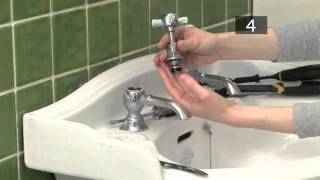
A hose left on the spigot can trap water that freezes and splits the pipe inside your wall, and you will not see the damage until spring. This guide walks you through shutting off, draining and covering an outdoor faucet in about 10 minutes. It suits any homeowner closing up for cold weather.
YouTube video: How to Shut Off Your Outdoor Faucet for Winter (10-Minute Job)
YouTube’s video details do not confirm captions. Check CC in the player for available tracks.
- Video length
- 1 min 50 s
- Time to do it
- 10 minutes
- Difficulty
- Easy
- Steps
- 8
What you need
Steps
Pull the garden hose off the outdoor faucet. Tip it up and let all the water run out, then coil it and store it indoors for the winter.
Find the inside shutoff valve for that faucet. Look on the pipe where it passes through the wall, usually in the basement, crawlspace or a nearby closet.
Turn the valve handle clockwise until it stops. This cuts the water supply to the outdoor faucet so no new water can freeze in the pipe.
Go back outside and open the faucet handle all the way. Let any trapped water drain out onto the ground or into a bucket.
If your inside valve has a small bleeder cap, hold a cup under it and unscrew it to release the last of the water, then screw it back on.
Leave the outdoor faucet handle open all winter. Any water left inside then has room to expand instead of cracking the pipe.
Push a foam faucet cover over the outside spigot and press it flat against the wall. This adds a layer of insulation against wind and hard frost.
Check the faucet a day later for drips. If water still runs, the inside valve is not fully closed or needs a new washer.
Tips and common mistakes
Tag the inside shutoff valve with a small label so you can find it fast next autumn.
Never force a stiff valve handle. A hard twist can snap the stem and leave you with a leak you cannot stop.
If your outdoor faucet is a frost-free sillcock, it still needs the hose removed and the line drained.
Snap a photo of the valve position in autumn so spring start-up is quick.
Questions
What if I cannot find an inside shutoff valve?
Some older homes only have a frost-free sillcock with no separate inside valve. In that case, remove the hose, open the faucet to drain it, and fit an insulated cover. Ask a plumber to add a shutoff if the pipe is prone to freezing.
Should the outdoor faucet stay open all winter?
Yes. Leaving the handle open lets any leftover water expand without splitting the pipe. Close it again in spring once you are sure the last frost has passed.
Do I need a foam cover?
It helps in exposed or windy spots, but it is not a substitute for shutting off and draining the line. Drain first, then cover.
The notes are drafted automatically from video details and general task knowledge. How the guide was prepared
Report a correction