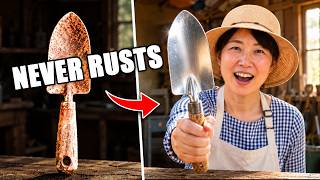
Bring a dull, rusty pair of pruning shears back to a clean cutting edge by taking them apart, clearing the rust, sharpening the blade with a drill-mounted abrasive and polishing the edge. It suits home gardeners happy to handle a screwdriver and a power drill. You only need basic tools and a dry twig to test the result.
YouTube video: The Secret to Making Pruning Shears Razor Sharp in 5 minutes! Most People Don’t Know This Trick
Caption availability is unknown. Check the CC control in the YouTube player.
Choose a chapter (9)
- Video length
- 7 min 34 s
- Time to do it
- 30 minutes
- Difficulty
- Easy
- Steps
- 10
What you need
Steps
Test the shears on a dry twig before you start. If the blade crushes or tears the wood instead of slicing it cleanly, the edge needs sharpening.
Unscrew the pivot bolt and separate the two halves of the shears. This gives you a clear run at the full cutting edge and the rusted areas.
Mix your rust remover, such as white vinegar, and soak the rusty blade and pivot parts in it. Leave them long enough for the rust to soften.
Scrub the softened rust off with a wire brush or steel wool until the metal is clean. Dry the blade fully with a cloth before sharpening.
Fit a sharpening stone or sanding disc arbor into your drill chuck. Tighten it properly and check it runs true before you switch on.
Clamp the blade securely and run the drill at low speed. Hold the abrasive flat against the existing bevel angle and work steadily along the edge.
Dip the blade in water as you go to stop the metal overheating. Blue or scorched steel loses its hardness and will not hold an edge.
Polish the edge with toothpaste on a cloth or buffing pad to strip the burr and leave a smoother cutting face.
Wipe off all paste and metal dust, put a drop of oil on the pivot bolt, then reassemble the shears and tighten the nut so the blades close with light resistance.
Test the finished shears on a dry twig or a sheet of paper. A sharp pair slices cleanly with no crushing or dragging.
Tips and common mistakes
Sharpen the bevel side only and leave the flat back of the blade alone, or the two blades will stop meeting properly.
Wear safety glasses and gloves whenever you handle the bare blade or a wire brush.
Do not press hard with the drill. Light, even passes keep the edge cool and stop you grinding a hollow in the blade.
Oil the pivot and wipe the blades dry after every use to slow down new rust.
Questions
Can I sharpen pruning shears without a drill?
Yes. A fine diamond file or a sharpening stone works well and gives you more control. Keep the file at the same angle as the original bevel and stroke in one direction along the edge.
Can I skip the rust removal step?
Not really. Rust pits the edge and the abrasive will just skate over the rough surface. Clean the metal first so the sharpening tool cuts evenly.
Does toothpaste really sharpen a blade?
Toothpaste is a mild abrasive, so it polishes and removes the fine burr rather than creating a new edge. Do the real sharpening with a stone or file first.
The notes are drafted automatically from video details and general task knowledge. How the guide was prepared
Report a correction