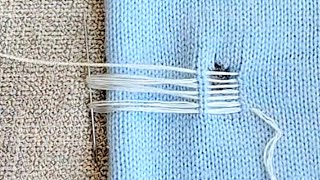
You will mark, press and hand stitch a hem so the stitches stay hidden on the right side. It suits skirts, trousers and dresses in woven fabric, and it is useful when you want a clean finish without a sewing machine. You need a needle, matching thread and an iron.
YouTube video: 5 Steps To Sewing a Perfect Invisible Hem By Hand (professional technique)
Caption availability is unknown. Check the CC control in the YouTube player.
Choose a chapter (8)
- Video length
- 5 min 20 s
- Time to do it
- 30 minutes
- Difficulty
- Easy
- Steps
- 7
What you need
Steps
Turn the garment inside out and mark the hem line with tailor's chalk or a removable pen. Use a ruler to keep the allowance even, then pin the fold in place.
Press the hem allowance to the wrong side along the marked line. Use a press cloth on delicate fabric and let the fabric cool before moving it.
Baste close to the folded edge with a contrasting thread. This holds the hem steady and gives you a guide to remove later.
Thread a hand needle with matching thread and knot the end. Bring the needle out through the folded hem edge, not through the right side of the garment.
Take a tiny stitch in the garment directly above the fold, catching only one or two threads. Slide the needle back into the fold.
Keep the thread loose and repeat stitches about 5 to 8 mm apart. Do not pull the thread tight, or the fabric will pucker and the stitches may show.
Remove the basting thread and press the finished hem with steam and a press cloth. Let it cool flat before wearing.
Tips and common mistakes
Use a thin needle and thread that matches the fabric weight; heavy thread can leave visible holes.
Work in small sections and check the right side often so you do not catch too much fabric.
Keep your fingers behind the needle and use a thimble when pushing through thick fabric.
Questions
Can I use a contrasting thread for the invisible stitch?
Yes, if you catch only tiny threads of the outer fabric. Matching thread is still easier for beginners.
What fabrics work best for a hand invisible hem?
Woven fabrics such as cotton, wool, linen and polyester blends work well. Test on a scrap first, and handle loose or slippery fabrics with extra care.
How far apart should invisible hem stitches be?
Aim for about 5 to 8 mm between stitches. Smaller stitches are stronger, but keep them loose so the hem can move.
The notes are drafted automatically from video details and general task knowledge. How the guide was prepared
Report a correction