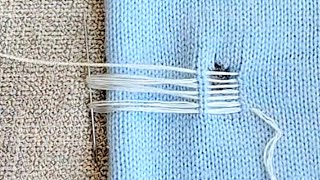
A bound buttonhole has clean fabric lips instead of a stitched slit, which makes it strong and neat on jackets and coats. This guide suits sewers who can already use a machine and handle small, precise pieces. You need a scrap of matching fabric, interfacing and a buttonhole foot.
YouTube video: How To Sew A Bound Buttonhole #learntosew #sewing #sewingtutorial #sewingtips #sewingtechniques
Caption availability is unknown. Check the CC control in the YouTube player.
- Video length
- 2 min 53 s
- Time to do it
- 30 minutes
- Difficulty
- Medium
- Steps
- 8
What you need
Steps
Mark the buttonhole line on the right side of your garment with chalk. Check the instructions for your exact model before choosing this setting or amount.
Check the instructions for your exact model before choosing this setting or amount. Press them flat.
Pin one rectangle to the right side of the garment, centred over the marked line. Check the instructions for your exact model before choosing this setting or amount.
Repeat with the second rectangle on the same line, so the two stitched boxes sit side by side. Keep the stitches small and even.
Cut along the marked centre line between the two boxes, stopping just short of each end. Snip diagonally into the corners without cutting the stitching.
Push both fabric rectangles through the slit to the wrong side. Press the lips flat and fold them so they meet in the middle.
Secure the lips with small hand stitches at each end, or stitch a triangle of tiny machine stitches across the ends to hold them.
Press the finished buttonhole, place the button underneath and check the fit. Trim any loose threads.
Tips and common mistakes
Test the whole method on a scrap first, since the lip width depends on your fabric thickness.
Use small stitches and a fine needle so the corners stay sharp and do not fray.
Do not cut the corner snips past the stitching or the buttonhole will pull apart.
Press after every fold, because a bound buttonhole only looks crisp when it is flat.
Questions
Can I sew a bound buttonhole on any fabric?
It works best on medium to heavy woven fabrics like wool, cotton twill or canvas. Very light or stretchy fabrics are hard to bind neatly.
Do I need a special buttonhole foot?
No. A standard presser foot works if you mark the lines and sew slowly. A buttonhole foot just makes the rectangle easier to keep even.
How wide should the buttonhole be?
Check the instructions for your exact model before choosing this setting or amount. Check with the actual button before you cut.
The notes are drafted automatically from video details and general task knowledge. How the guide was prepared
Report a correction