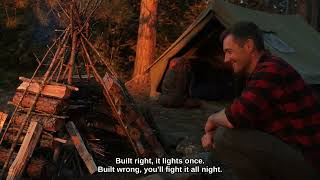
You will build a simple A-frame shelter from a tarp and cord, held on a tight ridgeline between two trees. It suits campers who want a light, cheap roof that breathes better than a sealed tent. You need a tarp, about 50 feet of cord and two anchor points.
YouTube video: The $10 Campsite Setup That Beats a $300 Tent, Every Single Time
Caption availability is unknown. Check the CC control in the YouTube player.
- Video length
- 19 min 31 s
- Time to do it
- 20 minutes
- Difficulty
- Easy
- Steps
- 8
What you need
Steps
Pick two trees or poles about 10 feet apart on flat, clear ground. Keep the shelter at least 15 feet from your fire and upwind of it.
Tie a bowline around the first anchor, run the cord to the second, and tension it with a trucker's hitch. The ridgeline must be tight, not sagging.
Drape the tarp over the ridgeline so it sits centred, with one long edge running along the line.
Clip or tie the tarp to the ridgeline with prusik loops. These slide by hand so you can re-tension the roof without untying knots.
Guy out each corner with a taut-line hitch. Pull the lines firm and check them again before you sleep.
Leave a hand-width gap along the bottom edge for airflow. Stake the edges loose rather than pinning them flat to the ground.
Tie short drip lines under the tarp near the ridgeline. Rain runs down the cord and drops clear instead of running inside.
For a corner with no eyelet, wrap a small pebble in the tarp, tie a cord behind it and pull tight.
Tips and common mistakes
Closing the bottom gap is the most common mistake. It traps your breath inside and the roof drips.
A sagging ridgeline is what makes a tarp fail. Re-tension the trucker's hitch and prusiks when the cord stretches.
Keep nothing that burns under the tarp, including stoves and candles.
Neither a tarp nor a tent protects you from lightning. When it thunders, get in a hard-topped vehicle with the windows up and wait 30 minutes after the last rumble.
Questions
Why is my tarp wet inside when it never rained?
Your breath is condensing on the underside because the edges are sealed. Open the bottom gap and loosen the staked edges so moist air can escape.
How do I stop water running down the ridgeline and into the shelter?
Tie short drip lines under the tarp just below the ridgeline. Water follows the cord and drips off before it reaches you.
Can I use this shelter in wind or snow?
A low A-frame handles light wind, but a tent is better in strong wind, snow and bugs. Move to a solid shelter if the weather turns serious.
The notes are drafted automatically from video details and general task knowledge. How the guide was prepared
Report a correction