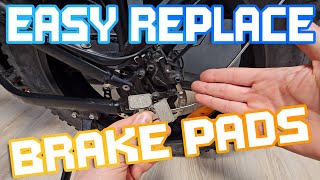
Volkswagen Passat Rear Brake Pads and Discs Replacement DIY VW Passat B8 Hinten Bremsen Wechsel, by Dr CPT on YouTube. 13 min 1 s.
- Video length
- 13 min 1 s
- Time to do it
- 1.5 hours
- Difficulty
- Medium
- Steps
- 10
What you need
Steps
Park on flat ground, chock the front wheels and loosen the rear wheel bolts half a turn before lifting.
Release the electronic parking brake and, if needed, use a diagnostic tool to put the rear calipers into service mode.
Jack up the rear, support it on axle stands and remove both rear wheels.
Unbolt the caliper guide pins and lift the caliper off the carrier. Hang it with a strap so the brake hose is not stretched.
Remove the caliper carrier bolts and take off the old disc. Clean the hub face with a wire brush and brake cleaner.
Fit the new disc, refit the carrier and torque its bolts to the VW spec for your model.
Wind the caliper piston back with the rewind tool. Fit the new pads into the carrier and slide the caliper back over them.
Refit the guide pins and torque them to spec. Repeat on the other side.
Refit the wheels, lower the car and torque the wheel bolts in a star pattern.
Press the brake pedal several times until it feels firm, check the fluid level and bed the pads in with gentle stops.
Tips and common mistakes
Brake work is a safety-critical job, so use axle stands, never just a jack, and get a professional to check your work if unsure.
Open the brake fluid reservoir cap before winding the pistons back so the fluid has somewhere to go.
Clean and grease the caliper guide pins with brake grease, but keep grease off the disc and pad faces.
If the pedal still feels soft after bleeding, do not drive the car until the fault is fixed.
Questions
Do I need a diagnostic tool for the rear brakes?
On many Passat B8 cars the electronic parking brake must be put into service mode before the caliper can be wound back. A suitable scan tool or app makes this easier.
Can I reuse the old discs?
Only if they are above the minimum thickness stamped on the disc and show no deep scoring or rust. New discs are cheap insurance on a safety part.
How do I bed in new pads?
Drive gently for the first few hundred kilometres and avoid hard stops. Make a few moderate stops from low speed to seat the pads.
This guide was drafted from the video's details and general task knowledge. It has not been checked against the full video. Check the video and relevant product instructions before following a procedure. Report a correction.