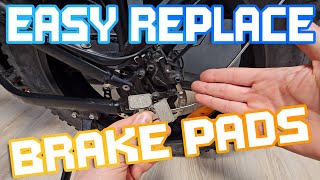
How to replace the Front Brake pads and rotors on 2019- 2026 Subaru Ascent | Easy Steps, by 8 Series Auto Services on YouTube. 12 min 27 s.
- Video length
- 12 min 27 s
- Time to do it
- 2 hours
- Difficulty
- Medium
- Steps
- 10
What you need
Steps
Check for worn brakes first. Look for thin pads, uneven pad wear, deep grooves, heat spots or rust on the rotors, plus squealing, grinding, pedal pulsation or steering wheel shake when braking.
Loosen the front wheel lug nuts, jack up the car and set it on jack stands. Remove the wheel so you can reach the caliper and bracket.
Unbolt the caliper guide pins and bolts with a ratchet and hex bit socket. Lift the caliper off the bracket and hang it with a bungee or wire so the brake hose is not stretched.
Pull the old brake pads out of the bracket. Note which pad sits on the piston side so the new set goes back the same way.
Compress the brake piston back into the caliper with a C clamp or a caliper piston compressor tool. Open the brake fluid reservoir cap first and watch the fluid level.
Remove the caliper bracket bolts and take off the bracket. Pull the old rotor straight off the hub. If it is stuck, tap it with a rubber mallet, not a metal hammer.
Clean the hub face with brake cleaner and fit the new rotor. Reinstall the caliper bracket and torque the bolts to the Subaru spec for your model year.
Fit the new pads with any shims or clips in the correct spots. Grease the pad ears and guide pins lightly with brake grease, keeping grease off the friction surface.
Slide the caliper back over the pads and install the guide pins and bolts. Torque them to spec, then refit the wheel and lower the car.
Press the brake pedal a few times until it feels firm before you drive. Then test the brakes slowly at low speed in a safe area.
Tips and common mistakes
Never let the caliper hang by the brake hose, because the hose can tear and you will lose braking.
Open the brake fluid reservoir before compressing the piston so fluid does not overflow.
Use a torque wrench on the caliper and bracket bolts, since loose brake bolts are dangerous.
Bed in the new pads with a few gentle stops from low speed before normal driving.
Questions
Do I need to bleed the brakes after replacing pads and rotors?
Usually no, as long as you did not open the hydraulic system. Just pump the pedal until it is firm. If the pedal still feels soft or spongy, bleed the brakes.
Can I reuse the old rotors if they look fine?
Only if they are above the minimum thickness stamped on the rotor and have no deep grooves or heat spots. New pads on worn rotors often cause noise and poor braking.
How do I know if my rotors are warped?
A pulsing brake pedal or a shaking steering wheel when braking is the usual sign. Check for uneven wear and heat spots during the inspection.
This guide was drafted from the video's details and general task knowledge. It has not been checked against the full video. Check the video and relevant product instructions before following a procedure. Report a correction.