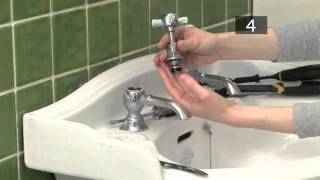
A running or leaking toilet is often caused by a worn fill valve, the part that refills the tank after a flush. This guide walks you through swapping it for a new one with basic hand tools. It suits any confident beginner and takes about half an hour.
YouTube video: Toilet Repair Fill Valve - DIY Plumbing - The Expert Plumber
Caption availability is unknown. Check the CC control in the YouTube player.
- Video length
- 4 min 48 s
- Time to do it
- 30 minutes
- Difficulty
- Easy
- Steps
- 9
What you need
Steps
Shut off the water at the supply valve behind or under the toilet tank. Turn it clockwise until it stops, then flush the toilet to empty the tank.
Sponge out the water left in the bottom of the tank and put a towel and bucket under the supply line. Some water always stays in the pipe.
Unscrew the water supply line from the bottom of the fill valve with an adjustable wrench. Hold the valve body so it does not twist.
Loosen the plastic nut underneath the tank that holds the fill valve, then lift the old valve out through the top of the tank.
Set the new valve to the same height as the old one. Slide or twist the body until the top sits about an inch above the overflow tube.
Fit the new valve through the tank hole with its rubber washer underneath. Hand tighten the plastic nut from below, then snug it gently with pliers.
Reconnect the supply line to the new valve and hand tighten the coupling, then add a quarter turn with the wrench. Do not overtighten.
Turn the water on slowly and let the tank fill. Check the water level against the line on the overflow tube and adjust the float up or down as needed.
Flush a few times and check both the supply connection and the tank nut for drips. Tighten slightly if you see any, then dry the area and check again.
Tips and common mistakes
Take a photo of the old valve and supply line before you remove anything, so you can match the setup.
Plastic nuts and shanks crack easily, so stop as soon as they feel snug.
If the toilet still runs after the swap, check the flapper and the overflow tube height.
Buy the valve first and compare it to the old one, since tank depths and connection sizes vary.
Questions
How do I know the fill valve is the problem?
Common signs are a toilet that keeps running, water on the floor near the tank, or a tank that refills slowly or noisily. A hissing sound after the flush is another clue.
Do I have to empty the whole tank?
Yes, at least the water above the valve nut. Flush first, then sponge out what is left so it does not spill when you tip the old valve out.
Can I reuse the old supply line?
Often yes, if it is braided steel and the rubber washer looks clean and uncracked. Replace it if it is stiff, corroded or the washer is worn.
The notes are drafted automatically from video details and general task knowledge. How the guide was prepared
Report a correction