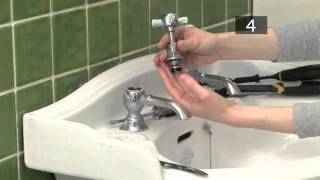
Removing a bathroom sink means shutting off the water, draining the lines, and taking apart the drain and faucet connections before lifting the sink off the counter. It suits homeowners doing a sink replacement. You need basic hand tools and a bucket to catch water.
YouTube video: How to Remove a Bathroom Sink — Don't Start Until You Do This!
Captions are available. Use CC in the YouTube player.
- Video length
- 13 min 37 s
- Time to do it
- 45 minutes
- Difficulty
- Medium
- Steps
- 8
What you need
Steps
Close the shutoff valves under the sink and open the faucet to release pressure in the lines. If there are no valves, shut off the main water supply.
Place a bucket under the p-trap and loosen the slip nuts to remove the trap. Empty it into the bucket.
Disconnect the faucet supply lines from the shutoff valves with a wrench. Keep a towel under the fittings to catch drips.
Disconnect the sink drain from the wall or floor pipe, then lift the drain assembly out of the sink.
Cut or scrape away the old caulking and silicone around the sink rim with a utility knife.
Loosen the mounting clips or hardware under the sink that hold it to the countertop.
Lift the sink straight up and off the vanity, then set it aside. Get help for a heavy sink.
Inspect the cabinet floor, valves and wall for leaks, water damage or rot before installing the new sink.
Tips and common mistakes
Wear safety glasses when cutting old caulking, since bits can fly up.
Keep the p-trap parts in a bag so you can reuse or match them for the new sink.
Check the shutoff valves for drips before you start, because old valves often fail when turned.
Questions
Do I need to turn off the main water supply?
Only if the sink has no shutoff valves or they are stuck. Otherwise close the two valves under the sink.
Can I reuse the old p-trap?
Sometimes, if it is in good shape and fits the new drain. Many plumbers replace it with a new one to avoid leaks.
Why open the faucet after shutting off the water?
It releases pressure in the lines so water does not spray when you disconnect the supply lines.
The notes are drafted automatically from video details and general task knowledge. How the guide was prepared
Report a correction