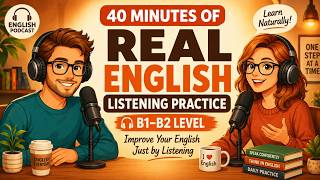
This guide shows you how to turn a slow, clear English conversation podcast into a daily listening and speaking routine. It suits intermediate learners at B1 to B2 level who want to understand natural speech and build confidence. You only need a phone or computer and about 45 minutes.
YouTube video: How to Think Positive Every Day | 50 Minutes of Real English Listening Practice (B1–B2)
YouTube’s video details do not confirm captions. Check CC in the player for available tracks.
Choose a chapter (12)
- Video length
- 47 min 5 s
- Time to do it
- 50 minutes
- Difficulty
- Easy
- Steps
- 6
What you need
Steps
Listen to the intro and the first section once without stopping. Focus on the general meaning, not on every word.
Play the section on negative thinking patterns again and note any words or phrases you do not know.
Listen to the real-life examples and write down the useful expressions the speakers use.
Try shadowing: play a short part and repeat each sentence out loud right after the speaker.
Go to the key phrases section and repeat each phrase slowly and clearly after the speaker.
Finish with the final tips section, then say or write one positive thought about yourself in English.
Tips and common mistakes
Pause and replay short parts instead of rewinding the whole episode.
Shadowing works best when you speak at the same speed as the speaker, so slow the audio down if needed.
Do one section a day rather than the full 47 minutes at once, so the phrases stick.
Write new words in full sentences so you remember how to use them.
Questions
Do I need to understand every word?
No. Aim to catch the main idea first, then go back to the parts you missed. Repeating sections is part of the practice.
How often should I do this?
A short session every day works better than one long session a week. Even 10 minutes of shadowing helps.
What level is this for?
The episode is aimed at intermediate learners, around B1 to B2. Beginners may find the natural speed hard at first.
The notes are drafted automatically from video details and general task knowledge. How the guide was prepared
Report a correction