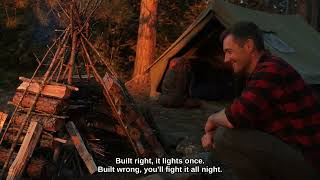
You will learn three tarp setups that keep you dry in rain and block wind: a classic A-frame, a lean-to windbreak and a low storm pitch. It suits hunters, campers and backpackers who carry a tarp instead of a tent. You need a tarp with guyout points, cordage and something to tie off to.
YouTube video: How to Pitch a Tarp | 3 Easy Ways to Pitch a Tarp with Brady Miller
Captions are available. Use CC in the YouTube player.
- Video length
- 15 min 44 s
- Time to do it
- 15 minutes
- Difficulty
- Easy
- Steps
- 8
What you need
Steps
Pick a flat, clear spot. Look up first and avoid dead branches and lone trees. Face the lowest edge of the tarp into the wind so the wind hits a slope, not an open end.
For the A-frame, tie one end of a ridgeline to a tree at chest height. Run it to a second tree 3 to 4 metres away and tension it with a taut-line hitch.
Drape the tarp over the ridgeline so the centre sits on the line. Pull the two corner guylines out wide and stake them, keeping the fabric drum tight.
Stake the remaining corner and side loops at a low angle. If rain is expected, keep the tarp low and leave a small gap at the bottom for airflow.
For a lean-to, tie one long edge of the tarp high between two trees or to trekking poles set at about waist height.
Pull the opposite edge down to the ground on the windward side and stake it tight. This makes a sloped wall that sheds rain and blocks wind.
For a storm pitch, stake one corner low to the ground and lift the opposite corner on a pole or tied tree. Pull the two side corners out and down to form a diamond shape.
Tension every line, then re-check after 10 minutes. Wet cordage and fabric stretch, so tighten guylines and add drip lines near the high tie-off points.
Tips and common mistakes
Pitch the tarp low and tight in strong wind, since a high, loose shelter flaps and catches gusts.
Use a taut-line hitch on every guyline so you can tighten the shelter without retying knots in the rain.
Angle the tarp so water runs off one corner instead of pooling in the middle of the fabric.
Keep the tarp a hand's width off the ground for airflow to reduce condensation inside.
Questions
What size tarp do I need for one person?
A 3 by 3 metre tarp gives you room to sleep plus gear space under an A-frame or diamond pitch. Smaller tarps work for emergency shelter only.
How do I stop rain running down the guylines?
Tie a short piece of cord to each high guyline and let it hang below the tarp. Water runs down the line and drips off that cord instead of following it inside.
Can I pitch a tarp without trees?
Yes. Use two trekking poles, bike parts or cut poles, and stake the guylines out wide. You can also tie off to a vehicle roof rack or a large rock.
The notes are drafted automatically from video details and general task knowledge. How the guide was prepared
Report a correction