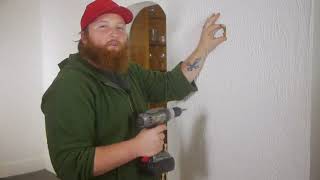
How to Repair a Small Hole in Drywall Panels (Easy and Quick) #drywall #pladur, by The MadMan of DRYWALL on YouTube. 1 min 20 s.
- Video length
- 1 min 20 s
- Time to do it
- 30 minutes
- Difficulty
- Easy
- Steps
- 8
What you need
Steps
Mark a square around the damaged spot with a pencil and measuring tape so the patch has straight, clean edges.
Cut out the square with a utility knife, scoring along a straight edge until the piece comes free.
Cut a matching square from a drywall scrap, slightly smaller than the opening so it drops in.
Drill a few 5mm holes or punch small dimples into the back of the patch to give the filler something to grip.
Press joint compound into the hole edges and push the patch in so it sits flush with the wall surface.
Fill over the patch and the seams with a thin layer of compound, then let it dry fully.
Sand the dried filler smooth and level with the surrounding wall, then wipe off the dust.
Prime and paint the repaired area to blend it into the rest of the wall.
Tips and common mistakes
Cut the hole square rather than round so the patch fits tightly and the seams are easy to fill.
Keep each filler coat thin and let it dry before adding the next one to avoid cracks.
Wear a dust mask when sanding drywall filler and open a window for airflow.
Questions
Can I patch a hole without a drywall scrap?
Yes. A self-adhesive mesh patch or a small piece of plasterboard works for small holes, then cover it with joint compound.
Do I need to prime before painting the patch?
Yes. Bare filler soaks up paint unevenly, so a coat of primer helps the paint match the rest of the wall.
How big a hole can this method fix?
It suits small holes up to about the size of your hand. Larger holes need a backing board or a bigger patch behind the wall.
This guide was drafted from the video's details and general task knowledge. It has not been checked against the full video. Check the video and relevant product instructions before following a procedure. Report a correction.