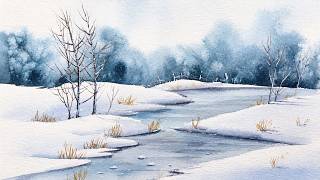
Paint a simple landscape with sky, mountains, rocks, trees and still water with reflections. It suits beginners who want a calm, colourful scene. You need watercolour paints, paper, a few brushes and water.
YouTube video: HOW TO PAINT WATER AND REFLECTIONS IN WATERCOLOR
YouTube’s video details do not confirm captions. Check CC in the player for available tracks.
- Video length
- 18 min 14 s
- Time to do it
- 45 minutes
- Difficulty
- Medium
- Steps
- 8
What you need
Steps
Sketch the scene lightly in pencil. Mark the horizon line, the mountain shapes, the rocks and tree areas, and the band of still water at the bottom.
Wet the sky area with clean water, then drop in light blue and warm colour while it is damp so the washes blend softly.
Paint the mountains with a darker mix while the sky is still slightly damp. Keep the edges soft to create distance and atmosphere.
Add the rocks and foreground shapes with stronger, darker colour. Let the paper dry between layers so the shapes stay crisp.
Paint the trees with a fine brush, using darker greens and browns. Vary the tone so nearer trees look stronger than distant ones.
Lay a light wash over the water area, keeping it paler than the land so it reads as still water.
Paint reflections straight down from the mountains, trees and rocks. Use broken horizontal strokes and slightly lighter colour than the objects above.
Soften the reflection edges with a damp brush and leave small gaps of paper to suggest ripples and light on the surface.
Tips and common mistakes
Keep reflections directly below their objects and slightly softer in tone.
Let each layer dry before adding detail so colours do not turn muddy.
Leave some white paper in the water for highlights and sparkle.
Questions
Do I need special watercolour paper?
Yes, use watercolour paper rather than thin drawing paper. It holds the water and washes without buckling.
How do I make the water look still?
Keep the wash flat and pale, and paint reflections as calm vertical shapes. Avoid strong diagonal strokes.
Can I fix a reflection that looks wrong?
Lift wet paint with a damp brush or paper towel while it is still wet. Once dry, soften edges with clean water.
The notes are drafted automatically from video details and general task knowledge. How the guide was prepared
Report a correction