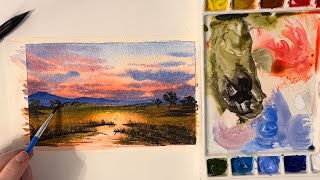
Paint Light on Water the Easy Way | Beginner watercolour, by Guy Troughton - Artist on YouTube. 5 min 15 s.
- Video length
- 5 min 15 s
- Time to do it
- 30 minutes
- Difficulty
- Easy
- Steps
- 8
What you need
Steps
Sketch the water area lightly in pencil. Mark where the brightest glints will sit so you know which parts of the paper must stay white.
Mix a pale blue wash for the water. Keep it weak so the paper still shows through and the light areas stay bright.
Paint the wash around your light marks, not over them. Leave the white paper untouched where the sparkle will be.
While the wash is still damp, drop in a slightly darker blue along the horizon or shadow side to suggest depth.
Let the wash dry fully. Resist brushing back into it, which lifts paint and muddies the colour.
Load a clean, barely damp brush and gently drag horizontal strokes across the water to suggest ripples.
Add small horizontal dashes of darker blue just under each light area to make the glints read as reflections.
Leave the painting flat to dry, then step back and check the light still sparkles before adding any final touches.
Tips and common mistakes
Plan your white areas first, because watercolour light comes from bare paper, not white paint.
Keep the brush drier than you think for ripples so you do not flood the wash.
Work fast and loose while the paper is damp to avoid overworking the surface.
Test colours on a scrap of the same paper before touching the painting.
Questions
Do I need white paint for the sparkle?
No. The brightest light usually comes from the bare paper you leave unpainted. A little white gouache can help at the end, but plan the gaps first.
How do I stop the water looking muddy?
Use weak mixes, let each layer dry, and avoid scrubbing the paper. Too many wet strokes over the same spot lift the paint and dull the colour.
What paper works best for beginners?
A heavier watercolour paper around 300 gsm handles wet washes better and buckles less than thin paper.
This guide was drafted from the video's details and general task knowledge. It has not been checked against the full video. Check the video and relevant product instructions before following a procedure. Report a correction.