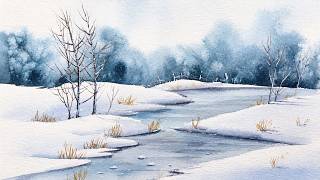
Paint a loose autumn landscape with watercolour trees using a small set of colours and a few brush sizes. It suits beginners who want a quick, forgiving scene. You need watercolour paper, paints, brushes, salt and washi tape.
YouTube video: How To Paint Autumn Trees in Watercolour Step by Step Tutorial
YouTube’s video details do not confirm captions. Check CC in the player for available tracks.
Other videos for this task
- How to paint autumn trees in watercolour 21:54 · 8 written steps
- Video length
- 15 min 57 s
- Time to do it
- 30 minutes
- Difficulty
- Easy
- Steps
- 9
What you need
Steps
Tape the watercolour paper to a board or block with washi tape so the edges stay flat while the paper dries.
Load a large flat brush with water and wet the whole sheet evenly. Let the shine settle but keep the paper damp.
Mix Ultramarine with a little Burnt Sienna for a soft grey-blue sky wash. Paint it across the top half and leave the lower area lighter.
Drop in Quin Gold and Burnt Sienna while the sky is still wet so the colours blend into warm autumn tones.
Paint distant tree shapes with a size 10 or 14 round brush using pale grey-blue mixes. Keep them soft and low contrast.
Build nearer trees with a size 6 round brush, mixing Burnt Sienna and Quin Gold for orange and rust foliage.
Add trunks and branches with a size 4 or 2 brush using a dark mix of Ultramarine and Burnt Sienna.
Sprinkle a pinch of table salt onto damp foliage areas. Leave it to dry fully, then brush the salt away.
Finish with touches of white gouache on branches and foliage edges to suggest light and frost.
Tips and common mistakes
Keep the paper damp but not puddling, or the colours turn muddy.
Let each layer dry before adding sharp detail so shapes stay crisp.
Test salt on a scrap of damp paper first, as results vary with paper and humidity.
Questions
Do I need all five brush sizes?
No. A large flat brush, one medium round and one small round cover the whole painting. Add the others only if you want finer detail.
Why use salt on watercolour?
Salt draws pigment away as it dries and leaves speckled textures that look like leaves and light. Remove it once the paper is completely dry.
Can I use a different watercolour paper?
Yes, but use cold pressed paper around 300gsm so it takes water without buckling. Thin paper will warp under wet washes.
The notes are drafted automatically from video details and general task knowledge. How the guide was prepared
Report a correction