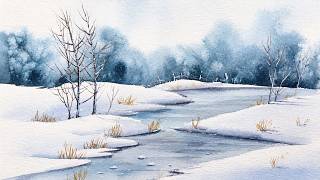
Paint a warm autumn scene with snow-capped blue mountains, golden trees, a sunset sky and a flowing river. It suits beginners who want to practise blending, layering and atmospheric depth. You need acrylic paints, a canvas and a few flat, round and detail brushes.
YouTube video: How to Paint a Stunning Autumn Mountain Landscape in Acrylic | Easy Painting Tutorial for Beginners
Caption availability is unknown. Check the CC control in the YouTube player.
- Video length
- 24 min 7 s
- Time to do it
- 2 hours
- Difficulty
- Medium
- Steps
- 10
What you need
Steps
Sketch a light horizon line about two thirds up the canvas. Block in the mountain shapes above it and the river path below, keeping the river narrow at the top and wider at the front.
Paint the sunset sky first. Blend sky blue into golden yellow near the horizon with a wide flat brush while the paint is still wet, so the colours merge softly.
Paint the distant mountain ranges in pale blue mixed with white. Keep them light and low in contrast so they sit far back in the scene.
Add the main snow-capped peaks with deeper blue on the shadow side and white on the sunlit side. Let the warm sunset light touch the upper edges.
Paint the misty valley with a thin wash of pale blue and white. Keep the edges soft so the mist blends into the mountains.
Block in the dark green pine forest below the mountains using short vertical strokes. Vary the greens so the trees have depth and texture.
Paint the golden autumn trees with dabs of yellow, orange and warm brown. Layer lighter dabs on top of darker ones to build leafy texture.
Fill the river with horizontal strokes of blue, then add golden and white reflections. Keep the strokes flat to suggest still, shimmering water.
Add rocks and riverbanks in warm brown and grey, then paint grasses and small wildflowers in the foreground for detail and movement.
Step back and check the balance of warm and cool colours. Strengthen highlights on the water and peaks, and soften any harsh edges.
Tips and common mistakes
Let each layer dry before adding the next, or the colours will turn muddy.
Keep distant mountains paler and less detailed than the foreground to create depth.
Use horizontal brushstrokes for reflections so the water reads as flat and calm.
Work from the back of the scene to the front so foreground details stay crisp.
Questions
Do I need to let the sky dry before painting the mountains?
Yes. Letting the sky dry stops the mountain colours from smearing into it. A hairdryer on a cool setting speeds this up.
Can I paint this on a small canvas?
Yes, but use smaller brushes and fewer foreground details. A canvas around 30 by 40 cm gives enough room for the mountains and river.
How do I stop the autumn trees looking flat?
Layer darker orange and brown dabs first, then add lighter yellow dabs on top. This builds texture and a sense of light hitting the leaves.
The notes are drafted automatically from video details and general task knowledge. How the guide was prepared
Report a correction