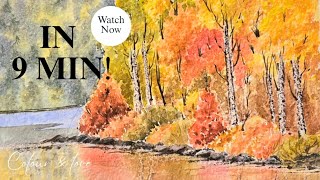
Watercolor Painting Tutorial (Autumn Leaves) #art #artist #watercolor #painting #diy #how #relaxing, by Artful Mindspace on YouTube. 2 min 45 s.
- Video length
- 2 min 45 s
- Time to do it
- 15 minutes
- Difficulty
- Easy
- Steps
- 8
What you need
Steps
Tape your watercolour paper to a board so it stays flat. Fill a jar with clean water and keep a paper towel beside it for drying your brush.
Draw a simple leaf in pencil: one central vein, a pointed tip and a rounded base. Keep the line light so it fades under the paint.
Wet the inside of the leaf shape with clean water using your medium brush. The paper should look damp and slightly shiny, not swimming in water.
Drop yellow near the tip, orange in the middle and red near the stem. Let the colours touch and bleed on their own instead of brushing them together.
Tilt the board a little to help the paint move, then lay it flat. Leave the leaf to dry until the wet shine disappears.
Mix a darker brown or red and paint the central vein and a few side veins with the tip of your small brush.
Add a soft shadow under the leaf with pale blue-grey. Keep it light so the leaf still stands out.
Let everything dry completely, then peel off the tape and gently erase any pencil lines you can still see.
Tips and common mistakes
Test your mixed colours on a scrap of the same paper before you touch the leaf.
Too much water makes the colours run into dull puddles, so blot your brush on the towel first.
Let each layer dry before adding veins, or the lines will spread and blur.
Questions
Which paint colours do I need for autumn leaves?
A warm red, orange and yellow will cover most autumn shades. Add a brown or a dark red for the veins and a pale blue-grey for the shadow.
Why do my colours turn muddy?
Muddy patches usually come from too much water or from brushing colours together too much. Drop the paint in and let it blend on its own.
Can I use normal paper instead of watercolour paper?
Thin printer paper will buckle and pill when it gets wet. Watercolour paper, around 200 gsm or heavier, holds the water and keeps the colours bright.
This guide was drafted from the video's details and general task knowledge. It has not been checked against the full video. Check the video and relevant product instructions before following a procedure. Report a correction.