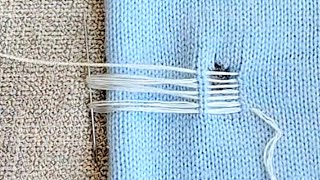
You will cover a hole or worn area with a fabric patch and a neat sashiko running stitch. This visible mending method suits beginners and works best on woven cotton or linen shirts. You need a scrap of light fabric, sashiko thread and a needle.
YouTube video: Repair Shirt with Simple Running Stitch | Sashiko Visible Mending Tutorial (Part 1)
Captions are available. Use CC in the YouTube player.
Choose a chapter (5)
- Video length
- 6 min 37 s
- Time to do it
- 45 minutes
- Difficulty
- Easy
- Steps
- 7
What you need
Steps
Wash and dry the shirt. Trim loose threads around the hole and press the damaged area flat from the inside. If the fabric is very frayed, sew a few small stitches to hold the edges together.
Cut a patch from light cotton or linen. Make it at least 1 inch larger than the hole on every side. A thin patch is easier to stitch through than denim or heavy canvas.
Place the patch behind the hole so its right side faces the inside of the shirt. Pin or baste it flat. Smooth out wrinkles so the shirt and patch lie even.
Use a ruler and water-erasable pen or hera marker to draw straight parallel lines across the patched area. Space the lines about 1/4 to 3/8 inch apart.
Thread a sashiko needle with sashiko thread and knot the end. Bring the needle up through the patch and shirt at the start of the first line.
Sew small, even running stitches along the line. Aim for stitches about 1/8 inch long with the same size gap. Keep the fabric relaxed and do not pull the thread tight.
Continue across the marked lines. At the end, take the thread to the back, knot it, and weave the tail under a few stitches. Press the mended area gently.
Tips and common mistakes
Use a sashiko thimble to push the needle through thick layers and keep your fingers away from the sharp point.
Choose contrasting thread so the running stitch pattern is easy to see.
Test stitch length on a scrap first. Short, tight stitches can pucker the shirt.
Questions
Can I use this method on jeans?
Yes. Use a heavier needle and thread, make the patch and stitches a little larger, and choose a woven patch that will not fray quickly.
Do I have to draw lines?
Lines keep the rows even, especially on your first mend. Use a water-erasable pen and remove the marks with a damp cloth after stitching.
What if the hole is very large?
Add a patch that covers the whole worn area and stitch rows across the firm fabric around it, not just across the hole.
The notes are drafted automatically from video details and general task knowledge. How the guide was prepared
Report a correction