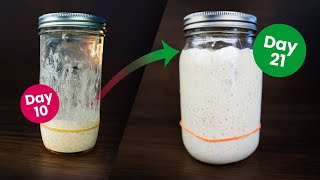
You will take an active sourdough starter through autolyse, mixing, stretch and folds, bulk fermentation, shaping, scoring and baking in a Dutch oven. It suits first-time bakers who want a hands-on walkthrough. You need a fed starter, a digital scale and a few hours of rising time.
YouTube video: How to Make Sourdough Bread for Beginners (Teaching My Mom Every Step)
YouTube’s video details do not confirm captions. Check CC in the player for available tracks.
Other videos for this task
- How to make sourdough bread from starter to baked loaf 35:22 · 10 written steps
Choose a chapter (8)
- Video length
- 46 min 47 s
- Time to do it
- 1 day
- Difficulty
- Medium
- Steps
- 7
What you need
Steps
Weigh your flour, water and salt on a digital scale. Mix the flour and water first and let the dough rest for the autolyse stage before adding anything else.
Add the active starter and salt to the rested dough. Mix until no dry flour remains and the dough comes together in a rough ball.
Do a set of stretch and folds: pull one side of the dough up and over the middle, turn the bowl, and repeat around all sides. Rest between sets.
Let the dough bulk ferment in a covered bowl until it looks puffy and has grown noticeably. Watch the dough, not just the clock.
Turn the dough onto a lightly floured surface and shape it into a tight round. Place it seam side up in a floured proofing basket.
Score the top of the loaf with a bread lame just before baking. Bake in a preheated Dutch oven, keeping the lid on for the first part.
Lift the lid for the last part of the bake so the crust browns. Take the loaf out and let it cool fully before slicing.
Tips and common mistakes
A flat, dense loaf usually means the starter was not active enough or the bulk ferment went too long.
Use a digital thermometer to check your water and dough temperature instead of guessing.
Let the bread cool completely before cutting, or the crumb will turn gummy.
Questions
How do I know when bulk fermentation is done?
The dough should look puffy and feel airy, with visible bubbles on top and sides. Judge by how much it has grown rather than a fixed time.
Do I need a Dutch oven?
A Dutch oven traps steam and gives a crisp crust, which is why it is used here. A heavy covered pot works the same way.
Can I skip the stretch and folds?
They build strength in the dough, so skipping them can leave the loaf slack. Do at least a few sets spaced out during the rest.
The notes are drafted automatically from video details and general task knowledge. How the guide was prepared
Report a correction