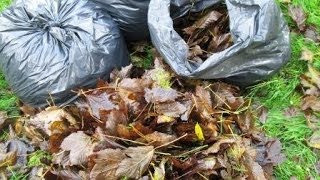
Leaf mold is the dark, crumbly soil that fallen leaves turn into on their own. This guide shows how to cage or sack your leaves, chop them and keep them damp so they break down as fast as possible. It suits any gardener with trees and a bit of patience.
YouTube video: The CLEVER Trick Smart Gardeners Use to Make Amazing Soil
YouTube’s video details do not confirm captions. Check CC in the player for available tracks.
- Video length
- 21 min 15 s
- Time to do it
- 1 hour to set up, then 12 to 2
- Difficulty
- Easy
- Steps
- 8
What you need
Steps
Rake your leaves into a pile. Use only clean leaves, and leave out any that are oily, diseased or swept up from a busy roadside where spray and exhaust collect.
Chop the leaves by running a mower over them a few times or putting them through a shredder. Smaller pieces rot much faster than whole leaves.
Make a wire cage from mesh and posts, or fill breathable sacks. Raise the cage or sacks off the ground so air moves and critters stay out.
Dampen the leaves as you fill the cage or sacks. Squeeze a handful: it should feel like a wrung-out sponge, not dripping and not bone dry.
Top up the water in dry spells. Fungi do the work here rather than the bacteria of a hot heap, so you do not need to turn the pile.
Leave a thin layer of leaves on your beds instead of raking every last one. Toads, beetles and other pest eaters live in that cover.
Wait about a year for a fine soil conditioner you can dig in, or two years for soft, crumbly finished leaf mold.
Spread the finished leaf mold as mulch or dig it into beds to hold moisture and loosen the soil. Treat it as a conditioner, not a fertilizer.
Tips and common mistakes
Broad soft leaves like maple rot down fastest, while thick leathery leaves and pine needles can take well over two years.
A rake is nearly as quick as a gas leaf blower, costs nothing to run and does not disturb the creatures in the pile.
If the pile dries out the fungi stall, so check the moisture every few weeks and water it again.
Bagged leaves left on the curb are free for the taking, but ask first before you help yourself.
Questions
How long does it take to make leaf mold?
About a year gets you a usable soil conditioner, and two years gives you soft, crumbly leaf mold. Chopping the leaves and keeping them damp is the main thing that speeds it up.
Do I need to turn the pile?
No. Leaf mold is broken down by fungi rather than the bacteria of a hot compost heap, so it works slowly on its own without turning.
Is leaf mold the same as fertilizer?
No. Leaf mold is a soil conditioner. It improves structure, drainage and moisture holding, but it adds very little in the way of nutrients.
The notes are drafted automatically from video details and general task knowledge. How the guide was prepared
Report a correction