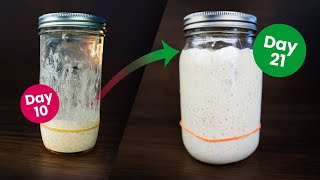
You will build a starter from flour and water, keep it healthy with the right feeding timing, and use it to bake a wet, folded dough in a cast iron pot. It suits beginners who have never kept a starter before. You need a kitchen scale, a jar and about a week of patience before the first loaf.
YouTube video: The Best Sourdough Bread In The World...My Amish Grandmother's Secret
Caption availability is unknown. Check the CC control in the YouTube player.
Choose a chapter (7)
- Video length
- 9 min 13 s
- Time to do it
- 7 days for the starter, then a
- Difficulty
- Medium
- Steps
- 9
What you need
Steps
Mix equal weights of flour and water in a jar, using some whole wheat or rye for the first batch. Stir well, scrape down the sides, and cover with a cloth or a loose lid.
Feed the starter once a day at the same time. Tip out about half of it first, then stir in fresh flour and water, so it stays strong instead of thinning out.
Read the signs before you feed. A grey liquid on top means it is hungry, a sour smell is normal, and pink or orange streaks mean mold, so throw it out and start again.
Build a fresh batch the night before you bake. Feed it, leave it covered at room temperature, and wait until it is bubbly and doubled before you use it.
Mix your dough wetter than you think it should be. A loose dough gives you an open crumb inside and an easier stretch during folding.
Skip hard kneading. Stretch one side of the dough up and fold it over the middle, turn the bowl, and repeat around the edge a few times.
Let the dough rise slowly at room temperature until it looks puffy and jiggly. Then put it in the fridge overnight to deepen the tang.
Preheat your cast iron pot in a hot oven, then lower the dough in carefully and bake with the lid on for the first part. Take the lid off at the end for a dark crust.
Lift the pot out with thick dry gloves and let the loaf cool fully on a rack. Cutting it warm squashes the inside and ruins the texture.
Tips and common mistakes
Feed by weight, not by eye, or your starter will slowly weaken.
Never seal the jar airtight, because the gas needs somewhere to go.
Set a daily phone reminder for feeding time, since missed feeds are what kill most starters.
Cast iron and steam get very hot, so use dry thick gloves and keep your face back when you open the lid.
Questions
How long does a starter take to be ready?
About a week of daily feeding. Wait until it doubles in size a few hours after each feed and smells pleasantly sour.
Can I keep it in the fridge?
Yes. Once it is strong, store it in the fridge and feed it once a week, then give it two room temperature feeds before baking.
What if my starter has dark liquid on top?
That liquid is called hooch and means it is hungry. Pour it off or stir it in, then feed more often.
The notes are drafted automatically from video details and general task knowledge. How the guide was prepared
Report a correction