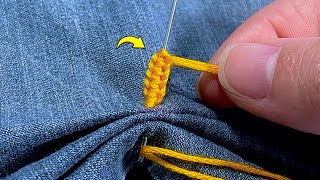
How to Invisibly Fix a Hole in a Sweater | Easy Mending Tutorial, by Little Star CC on YouTube. 1 min 40 s.
- Video length
- 1 min 40 s
- Time to do it
- 15 minutes
- Difficulty
- Easy
- Steps
- 8
What you need
Steps
Turn the sweater inside out and lay the hole flat over a darning mushroom or a smooth rounded object so the area stays stretched.
Trim any loose, frayed threads around the hole with small scissors, but leave the edges of the knit intact.
Thread a needle with yarn that matches the sweater in color and thickness, and knot the end.
Working from the inside, bring the needle up just outside one edge of the hole and pull the thread through.
Take small stitches back and forth across the hole in one direction, following the lines of the knit, until you cover it.
Weave a second set of stitches across the first at a right angle, passing over and under the threads to rebuild the fabric.
Keep the stitches loose enough that the sweater can still stretch, and do not pull the hole tight.
Finish on the inside with a small knot, trim the tail, and turn the sweater right side out to check the repair.
Tips and common mistakes
Match the thread to the yarn weight, not just the color, or the patch will look bulky.
Work on a stretched surface so the repair does not pucker when you wear the sweater.
Use a fine needle to avoid splitting the knit stitches around the hole.
Wash the sweater gently after mending and avoid a hot dryer, which can shrink wool.
Questions
Can I fix a hole in a cashmere sweater this way?
Yes, the same hand-sewing method works on cashmere and other fine knits. Use a very thin needle and yarn that matches the delicate fibers.
What if the hole is large or the edges are frayed?
A large hole with missing fabric is harder to hide with simple stitches. You may need a patch or a professional repair for a clean result.
Do I need a darning mushroom?
No, it just makes the work easier. A jar, a smooth ball or your hand inside the sleeve can hold the fabric stretched instead.
This guide was drafted from the video's details and general task knowledge. It has not been checked against the full video. Check the video and relevant product instructions before following a procedure. Report a correction.