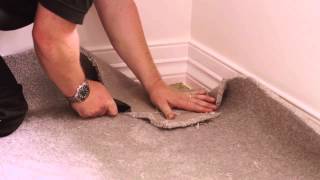
Laminate flooring #diy #kitchen #flooring, by KD Flooring Pro on YouTube. 1 min 23 s.
- Video length
- 1 min 23 s
- Time to do it
- 1 day
- Difficulty
- Medium
- Steps
- 9
What you need
Steps
Clear the kitchen and remove old flooring. Sweep and vacuum the subfloor so it is clean, flat and dry.
Check the subfloor for bumps and dips. Sand high spots and fill low ones with levelling compound, then let it cure.
Roll out underlay across the room, butt the seams and tape them. On concrete, lay a moisture barrier first.
Measure the room width and divide by the plank width. If the last row would be under 50 mm, trim the first row narrower.
Start in a corner with the tongue facing the wall. Slide 10 mm spacers between the planks and the wall on all sides.
Click the next plank into the short end at an angle, then press it down. Keep the end joints staggered by at least 200 mm.
For the last plank in a row, measure the gap, cut the plank to size and pull it in with the pull bar and mallet.
Cut around pipes and door frames with a jigsaw. Leave a 10 mm expansion gap at every edge and under the frames.
Finish the final row the same way, then remove all spacers. Fit skirting or beading over the expansion gaps.
Tips and common mistakes
Acclimatise the planks in the room for 48 hours before laying so they do not shrink or swell after fitting.
Never tap planks directly with the mallet, always use the tapping block to protect the click edge.
Leave a 10 mm gap at walls, pipes and door frames or the floor will buckle when it expands.
Check each row for straightness as you go, because small errors grow across a wide kitchen.
Questions
Can I lay laminate over old vinyl or tile?
Yes, if the old floor is flat, sound and firmly stuck down. Otherwise remove it or use a levelling compound first.
Do I need underlay in a kitchen?
Yes. Underlay smooths minor dips, reduces noise and adds a little warmth. Use a moisture barrier too if the subfloor is concrete.
How long before I can walk on it?
You can walk on the finished floor straight away. Wait about 24 hours before moving heavy appliances back in.
This guide was drafted from the video's details and general task knowledge. It has not been checked against the full video. Check the video and relevant product instructions before following a procedure. Report a correction.