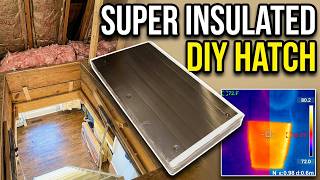
Radiant barrier foil reflects heat from your roof and helps keep the attic cooler. This guide shows how to fit it around vents, pipes and framing that get in the way. It suits confident DIYers who can work safely in a hot attic with a helper.
YouTube video: You Can Install Radiant Barrier! #energyefficienthomes #homeimprovement #diy
Caption availability is unknown. Check the CC control in the YouTube player.
- Video length
- 1 min 7 s
- Time to do it
- 3 to 5 hours
- Difficulty
- Medium
- Steps
- 8
What you need
Steps
Clear the attic floor and plan a path. Measure the space between rafters so you can cut foil panels to width before climbing up.
Work in the cool part of the day. Attics get dangerously hot, so take water, a work light and a phone, and tell someone you are going up.
Start at one end and staple or cap-nail the foil to the underside of the rafters, shiny side facing down into the attic.
When you reach a pipe, vent or brace, stop and measure the obstruction. Cut a notch or slit in the foil so it fits around the object.
Overlap the cut edges and tape the seams with foil tape. Press the tape down firmly so hot air cannot pass through.
Keep going across the whole run, overlapping each panel by about 2 inches and taping every seam.
Leave a clear gap at the ridge and at the eaves so air can still move through the attic vents.
Check your work with a light. Re-tape any loose seams and make sure no foil blocks a vent or covers wiring.
Tips and common mistakes
Never cover soffit or ridge vents, because trapped heat and moisture can damage the roof deck.
Keep foil at least a few inches away from recessed lights, chimneys and flues.
Wear gloves, since foil edges cut easily, and use a dust mask in a dirty attic.
Questions
Can I put radiant barrier right against the roof deck?
Most foil needs an air gap to work well. Attaching it to the underside of the rafters usually leaves that gap.
What if my attic has a lot of obstructions?
Cut the foil into smaller panels and tape the seams. Small pieces around pipes and braces work fine as long as the overlaps are sealed.
Will this replace attic insulation?
No. Radiant barrier reflects heat, but you still need proper insulation on the attic floor for real energy savings.
The notes are drafted automatically from video details and general task knowledge. How the guide was prepared
Report a correction