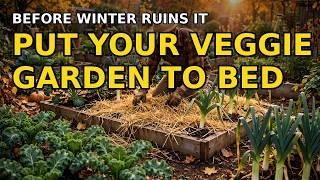
Three fall jobs make heavy clay soil easier to work next spring: test and correct the pH, dig in leaves or compost, then keep the ground covered. It suits any home gardener with a patch that drains badly or crusts over. A basic soil test kit is the only real cost.
YouTube video: How to Improve Garden Soil Before Winter (3 Fixes)
YouTube’s video details do not confirm captions. Check CC in the player for available tracks.
Choose a chapter (5)
- Video length
- 10 min 45 s
- Time to do it
- 2 hours plus waiting
- Difficulty
- Easy
- Steps
- 8
What you need
Steps
Test before you buy anything. Dig a small sample from several spots, mix it in a bucket, and send or test it. This tells you what your soil actually needs.
Read the pH result. Most vegetables like a pH of about 6.0 to 7.0. If your soil is too acid, apply garden lime in fall so it has time to work.
Skip lime if you garden in a dry western climate, where soils are often already alkaline. To lower pH there, use elemental sulfur instead.
Spread 2 to 4 inches of shredded leaves or finished compost over the bed. Shredded leaves break down faster than whole ones.
Dig or fork the material into the top few inches. Do this when the soil is moist but not soaking wet, never when it is muddy.
Sow a fall cover crop if you still have time. Oats suit cold areas, winter rye and winter wheat survive harder frosts. Check your local planting window.
If the cover crop window has closed, spread a thick leaf mulch instead. It protects the soil surface through winter.
Leave the ground covered until spring. Lift the mulch or turn in the cover crop a few weeks before you plant.
Tips and common mistakes
Never add sand to clay soil. It can set like concrete.
Do not till wet soil or till the same bed again and again, as this damages structure.
Wait a couple of weeks after digging in rye before planting vegetables.
Retest your soil every few years rather than liming blindly each fall.
Questions
Does a home soil test measure nitrogen?
Usually not. Basic kits and lab tests report pH and nutrients like phosphorus and potassium, and fall nitrogen can wash away in wet regions anyway.
Can I just cover the bed with leaves and skip the digging?
Yes, in many beds. A thick leaf mulch over winter protects the soil, and worms and frost will work some of it in by spring.
How much lime should I add?
Follow the amount your soil test recommends for your soil type. More is not better, and over-liming locks up nutrients.
The notes are drafted automatically from video details and general task knowledge. How the guide was prepared
Report a correction