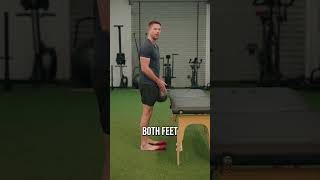
HOW TO: HINGE (Lift HEAVY & Save Your Lower Back!), by ScottHermanFitness on YouTube. 3 min 14 s.
- Video length
- 3 min 14 s
- Time to do it
- 10 minutes
- Difficulty
- Easy
- Steps
- 8
What you need
Steps
Stand with feet about hip-width apart. Hold a light dumbbell or kettlebell in front of your thighs, or start with no weight.
Push your hips straight back as if closing a car door with your backside. Let your knees bend slightly and keep your shins close to vertical.
Lower your torso while keeping your back flat and chest open. Stop when you feel a stretch in your hamstrings or your torso is near parallel to the floor.
Keep the weight close to your legs and let your arms hang straight. Do not pull with your back or round your shoulders.
Drive through your whole foot and squeeze your glutes to stand up. Finish tall without leaning back.
Practice the dowel drill: hold a broomstick against your head, upper back and tailbone. Keep all three contact points as you hinge.
Start with 2 to 3 sets of 8 to 12 slow reps using light weight. Add load only when your back stays flat for every rep.
Use the same hip-back pattern when you set up for a deadlift. Keep the bar close and your spine neutral as you lift.
Tips and common mistakes
Film yourself from the side or use a mirror to check that your back stays flat.
Do not chase depth; stop the rep before your lower back rounds.
Keep your neck in line with your spine and look at the floor a few feet ahead.
If your knees feel crowded, widen your stance slightly and push your hips back more.
Questions
How far should I lower?
Lower until your torso is close to parallel to the floor or you feel a strong hamstring stretch. Stop sooner if your back starts to round.
Should my knees bend during a hip hinge?
Yes, slightly. The movement comes from your hips moving back, not from bending your knees like a squat.
Can I practice a hip hinge without weights?
Yes. Use bodyweight or a broomstick for the dowel drill. Add a light dumbbell only when the pattern feels stable.
This guide was drafted from the video's details and general task knowledge. It has not been checked against the full video. Check the video and relevant product instructions before following a procedure. Report a correction.