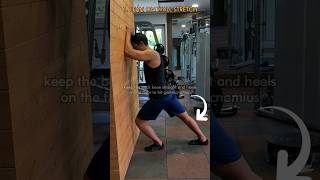
Stretching Won't Fix Your Tight Hamstrings (Do This Instead), by Body Fix Exercises—for over 50s on YouTube. 6 min 35 s.
- Video length
- 6 min 35 s
- Time to do it
- 20 minutes
- Difficulty
- Easy
- Steps
- 8
What you need
Steps
Test your glutes first. Lie on your back, bend your knees and lift your hips into a bridge. If your hamstrings cramp or take over before your glutes, weak glutes are likely part of the problem.
Strengthen the glutes with bridges and banded side steps. Do 2 sets of 10 to 15 slow reps, squeezing the buttocks at the top of each bridge and keeping the belly gently braced.
Check for nerve tension. Sit on a chair, straighten one leg and pull your toes toward you. If you feel pulling or tingling behind the knee or calf rather than mid-muscle, the nerves may be involved.
If nerve tension shows up, avoid hard hamstring stretching. Do gentle nerve glides instead: straighten the leg and point the toes, then relax and flex the foot, 10 slow reps per leg.
Test your hip flexors. Lie on your back and pull one knee to your chest while the other leg stays flat. If the flat leg lifts off the floor, your hip flexors are probably short.
Lengthen the hip flexors with a half-kneeling stretch. Kneel on one knee, tuck the pelvis under and gently push the hips forward. Hold 30 seconds per side, 2 rounds.
Release the hamstring with a foam roller or ball. Sit on it and roll slowly along the back of the thigh for 1 to 2 minutes per leg, pausing on tender spots for about 20 seconds.
Finish with an isolated eccentric hamstring stretch. Lie on your back with a band or towel around one foot, raise the leg to a comfortable stretch and lower it slowly over 4 to 5 seconds. Do 8 to 10 reps per leg.
Tips and common mistakes
Stop any stretch that causes tingling, numbness or sharp pain and get it checked by a health professional.
Keep the pelvis tucked during hip flexor stretches so you feel it at the front of the hip, not the lower back.
Do the glute and hip flexor work 2 to 3 times a week for several weeks before judging results.
Warm up for 5 minutes with walking before rolling or stretching cold muscles.
Questions
How do I know if my tight hamstrings are really nerve tension?
Nerve tension tends to feel like pulling, tingling or pins and needles behind the knee or in the calf, and it often gets worse when you point the toes. Muscle tightness usually sits in the middle of the back of the thigh.
Should I stop stretching my hamstrings completely?
Not always. If the cause is weak glutes or short hip flexors, fix those first and keep only gentle hamstring stretches. Hard stretching can make nerve symptoms worse.
How long until my hamstrings feel looser?
Most people notice some change within 2 to 4 weeks of consistent glute and hip flexor work. Long-standing tightness can take longer, so build it into your weekly routine.
This guide was drafted from the video's details and general task knowledge. It has not been checked against the full video. Check the video and relevant product instructions before following a procedure. Report a correction.